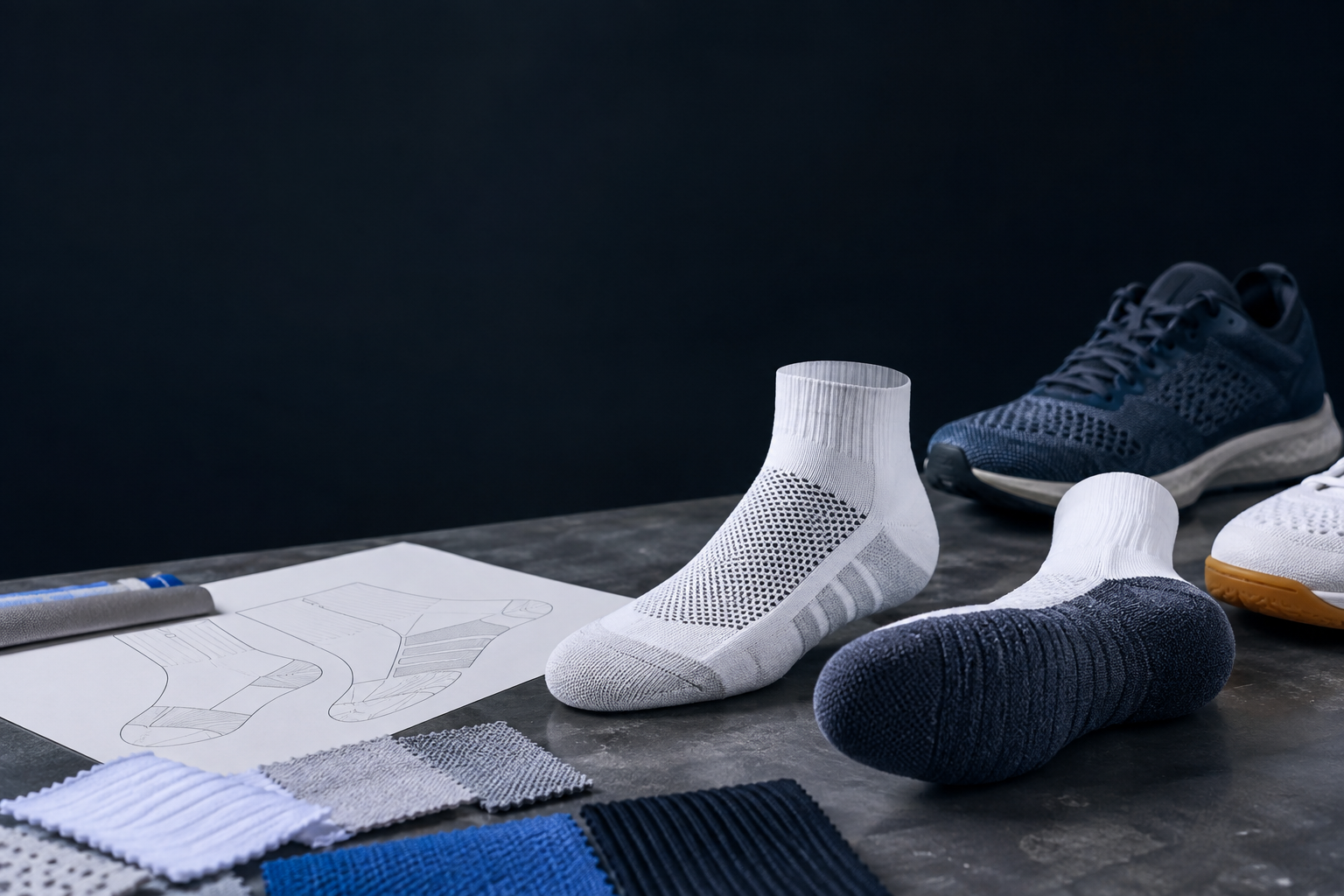
Direct answerMesh and terry solve different construction problems. Mesh is typically considered for airflow and lighter zones, while terry creates a thicker structure in selected areas. The right choice depends on sport, shoe volume, climate, cushioning location, yarn direction and the result confirmed on a sample.
Define the decision before comparing features
Mesh and terry are construction choices, not complete product benefits by themselves. Start with the product's sport, footwear, climate, session length and target hand feel. A buyer making a running sock for a close-fitting shoe may need a different balance from a team sock worn for repeated training sessions.
Write down what the wearer should notice and what the buyer will inspect. Useful criteria include airflow zones, thickness, softness, stretch, heel and toe position, visual texture, logo area and packaging appearance. This turns a vague request for a breathable cushioned sock into decisions the factory can discuss.
- Sport and activity
- Footwear volume
- Climate
- Target hand feel
- Review criteria
What mesh changes in a sock
Mesh creates a more open or lighter knit area in selected zones. Buyers often consider it on the instep or another area where reduced coverage may suit the product brief. The result still depends on yarn, knit density, transition design, sock tension and the shoe worn with it.
Specify mesh by location and purpose. A drawing should show its boundaries and how it connects to the surrounding structure. During sampling, check whether the transition is comfortable, whether the zone stays in place and whether the logo or color pattern remains clear across the changed texture.
- Mesh location
- Zone boundary
- Knit transition
- Stretch and recovery
- Logo interaction
What terry changes in a sock
Terry creates a thicker looped or padded structure in selected areas such as the sole, forefoot or heel. It can change the hand feel and the amount of space the sock occupies inside the shoe. More material is not automatically a better result, so the buyer should define where thickness is wanted and where a lighter structure is preferred.
Ask the factory to show full, half or localized terry on the athletic sock construction guide. Review the sample in the intended footwear and compare foot length, heel position and toe clearance. A product that feels comfortable outside a shoe may feel different when the shoe has limited internal volume.
- Terry location
- Thickness target
- Shoe clearance
- Heel position
- Toe clearance
Compare placement combinations
Many athletic socks use both structures instead of choosing one across the whole product. For example, a buyer may request a lighter instep with a more substantial sole, or a mesh upper with localized heel and forefoot structure. The important point is to define the map and inspect the transition rather than describing the sock as simply mesh or terry.
Use a simple comparison table with zone, requested structure, reason and sample result. This allows a revision to target one area. If the buyer changes the sole structure, record whether the change affects logo placement, yarn consumption, size measurements or packaging dimensions.
- Zone-by-zone map
- Requested structure
- Reason for choice
- Sample result
- Change impact
Choose yarn with the structure
Mesh and terry do not remove the need to specify yarn direction. Cotton, polyester, nylon, spandex and bamboo blends can produce different hand feels, stretch responses, appearances and care expectations. The same yarn direction can also behave differently when knit into a lighter mesh zone or a thicker terry zone.
Treat material selection as a documented preference with an approval step. If the factory proposes a substitution, compare the physical sample for feel, stretch, color, surface and fit. Record the approved blend or direction in the tech pack instead of leaving the decision in an informal message.
- Fiber direction
- Hand feel
- Stretch response
- Care expectation
- Substitution record
Check the commercial and production effects
A construction change can affect more than comfort. It may change knit time, material consumption, color transitions, size grading, logo clarity, packaging fold and the way pairs are inspected. Buyers do not need to estimate a cost from the article, but they should ask the factory which decisions change the quotation scope.
For BEZENTO projects, MOQ starts from 300 pairs and final requirements depend on design, materials, construction and packaging. Sampling is about 7 days excluding sample shipping. Confirm the requested structure and approval milestone before using those planning facts for an order.
- Material consumption
- Knit complexity
- Size grading
- Packaging fold
- Quote assumptions
Use a sample scorecard
Review mesh and terry with the same scorecard: zone placement, thickness, hand feel, shoe fit, heel and toe position, cuff comfort, stretch recovery, logo clarity, color and wash-care expectations. Mark each item pass, revise or open decision, and identify the sample version.
When giving feedback, describe the location and requested change. For example, ask to reduce the terry area under the forefoot or move a mesh transition from a logo zone. Clear location-based feedback is more useful than saying the sock needs more cushioning or more ventilation.
- Zone placement
- Thickness and feel
- Shoe fit
- Logo clarity
- Revision instruction
Choose with a use-case conclusion
Choose mesh where a lighter or more open zone fits the use case, and make the choice understandable to a future buyer who was not in the original sample meeting. Choose mesh where a lighter or more open zone fits the use case, terry where selected thickness and cushioning are part of the brief, or a mapped combination where different foot zones have different priorities. The conclusion should state the shoe, activity and review evidence behind the choice.
Keep the approved athletic sock construction guide, material direction, artwork and sample comments together. This gives the factory a stable production reference and lets the buyer explain why the final structure was selected when the product moves from development to repeat ordering.
- Use-case decision
- Construction map
- Material approval
- Sample comments
- Repeat-order reference
Ask better questions when the choice is unclear
If the buyer cannot decide between mesh and terry, ask questions that expose the trade-off: Which shoe will be used? Is the product for short high-intensity sessions or longer wear? Is the priority a lighter instep, a softer sole, visual texture, or a particular team specification? Which area must remain thin for fit?
The answers do not create a universal formula, but they make the next sample more purposeful. Ask the factory to state what changed between versions and keep the comparison focused on structure, yarn and placement. This avoids changing color, logo, size and cushioning all at once.
- Shoe and volume
- Session pattern
- Priority zone
- Thin-area requirement
- Version comparison
Record the approved construction for repeat orders
A repeat order should reference the approved sample and athletic sock construction guide, not only a product name or an old quotation. Note the mesh and terry zones, yarn direction, size range, logo version, packaging and any accepted tolerance. If the material or quantity changes, ask whether the construction needs a new review.
This record helps the buyer distinguish a true repeat from a new version. It also gives quality control a practical checklist for checking the same zones and prevents an informal description such as standard sports sock from becoming the production instruction.
- Approved sample
- Construction map
- Material direction
- Version control
- Repeat-order review
Keep the comparison honest
A useful comparison does not declare one structure the winner. It explains what changed, where it changed and which product condition made the choice sensible. Buyers should also note what remains unknown until sampling, such as the final hand feel, shoe interaction, color appearance or response to the intended care routine.
This approach gives product teams a defensible decision record. It prevents a feature name from becoming an unsupported promise and gives the factory clear questions to answer during development. Keep the conclusion tied to the approved sample and intended shoe. This supports consistent review across development and production. Buyers can attach it to the next quote request. This makes the construction decision easier to explain to sourcing, design and quality teams. during final approval and ordering. consistently.
- What changed
- Where it changed
- Reason for choice
- Open questions
- Sample evidence
Buyer Questions
Is mesh necessarily cooler than terry?
Mesh changes the knit structure in a selected zone, but the perceived result also depends on yarn, density, shoe fit and climate. Compare the intended sample rather than relying on a label.
Is terry only for winter socks?
No. Terry can be used in selected zones for different sports and footwear. The buyer should control placement and thickness so the shoe fit remains appropriate.
Can one sock combine mesh and terry?
Yes. Many briefs use different structures by zone. The construction map should show boundaries and the reason for each choice.
What should be checked on the sample?
Check structure placement, thickness, hand feel, shoe fit, heel and toe position, logo clarity, color and stretch recovery.
Will changing mesh or terry affect the quote?
It can affect materials, construction, grading, packaging or development scope. Ask the factory to state the changed assumptions in writing.
Discuss Your Custom Sock Requirements
Send your product type, artwork, quantity, size range, packaging, destination and target date for a practical project review.