Direct answerDefine the activity, wearer, fit, yarn direction, cushioning, ventilation, support zones, heel and toe construction, logo placement, size range, colors, quantity and packaging before requesting a final quote. The most reliable specification connects each feature to a use case and then validates it on a sample; a generic request for ‘high-performance socks’ is not specific enough for production.
Start with the activity and wearer
Running, studio training, team sports, hiking and everyday athleisure place different demands on a sock. Begin with the activity, footwear, climate, wear duration and target user instead of selecting features from a generic list.
A product brief should describe the desired experience without promising an outcome that has not been tested. For example, ‘reduce bulk inside a close-fitting shoe’ is a more useful design direction than an unsupported promise about comfort or injury prevention.
- Primary activity and footwear
- Indoor, outdoor, warm or cold use
- Target wearer and size range
- Expected wear duration
- Retail, teamwear or private-label positioning
Define the fit and construction
Fit comes from the relationship between size grading, stretch, cuff recovery, foot shape and the sock's knitted construction. A sock can have the correct nominal size and still feel wrong if the cuff, heel position or toe shape does not match the intended wearer.
Specify the sock height, cuff appearance, toe finish, heel shape and whether left/right anatomical construction is required. If the product will be worn in a specific shoe, evaluate the total bulk of the sock and footwear together.
- Sock height and cuff specification
- Size grading and measurement points
- Heel shape and position
- Toe-linking or seam preference
- Cuff recovery and stretch expectation
Choose yarn for the use case, not by name alone
Fiber names are only one part of performance. Blend ratio, yarn construction, knit density and finishing can change hand feel, drying behavior, shape retention and durability. Ask to review the complete material proposal rather than treating a single fiber as proof of a result.
A useful brief identifies the priority: soft hand feel, strength, drying, temperature management, color direction, cost or a balance of several requirements. The factory should state any substitution and its effect on the approved sample.
- Target blend or material direction
- Hand feel and thickness
- Moisture-management priority, if relevant
- Color and yarn availability
- Care-label implications
- Substitution approval process
Specify cushioning and ventilation zones
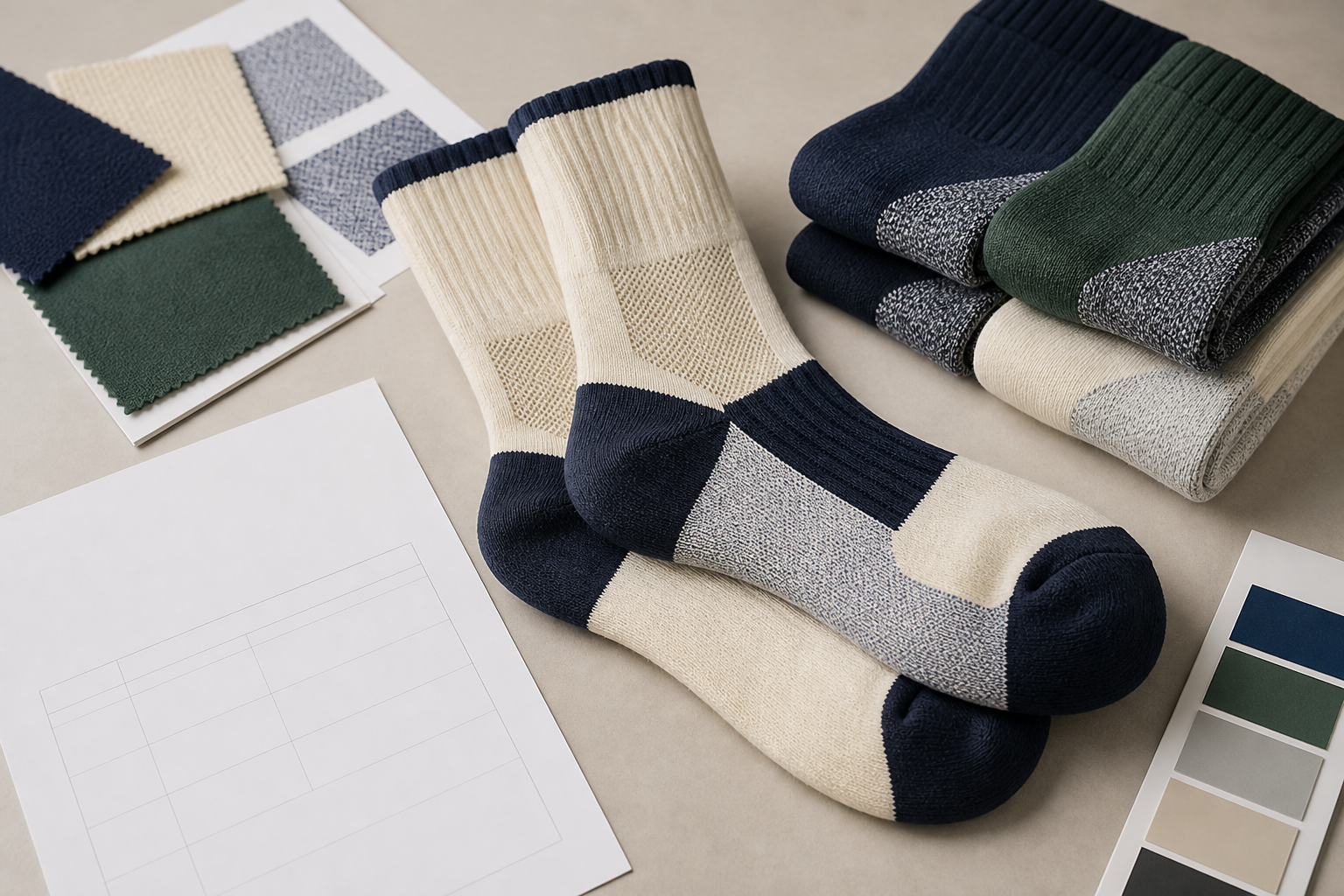
Cushioning can be full, targeted or minimal. Ventilation can be created through mesh or other construction choices. These zones affect bulk, feel, appearance and the relationship between the sock and the shoe, so they should be shown on a technical sketch or clearly marked reference sample.
Do not describe cushioning as automatically better. The appropriate amount depends on footwear volume, activity, climate, wearer preference and the required product position. Compare constructions on samples rather than choosing from marketing language.
- Sole cushioning coverage
- Heel and forefoot target zones
- Mesh or ventilation placement
- Toe and heel reinforcement
- Interaction with footwear fit
Add support and branding requirements
An arch band, rib structure or other support feature should be specified by location, appearance and intended feel. It should not be described as a medical or therapeutic feature unless a qualified review supports that claim.
Logo treatment also needs its own production note: method, size, location, colors, orientation and whether the mark must remain legible when stretched. Keep artwork and construction decisions in the same brief so the logo is evaluated on the real sock.
- Support-band location and appearance
- Logo method and dimensions
- Logo placement relative to stretch zones
- Color references
- Inside construction review
- Approved sample reference
Freeze quantities, packaging and approval gates
BEZENTO's MOQ starts from 300 pairs, with flexible color and size combinations. Final requirements remain subject to the design, materials, construction and packaging. Include the quantity breakdown in the brief so the quotation reflects the actual assortment.
BEZENTO's standard sampling estimate is about 7 days, excluding sample shipping time. Bulk production is typically about 25–35 days after the relevant approvals and order requirements are confirmed. The quotation should state the milestone that starts each estimate and what is excluded.
- Quantity by design, color and size
- Packaging format and label responsibility
- Sample approval method
- Target date and destination
- QC checkpoints and tolerances
- Written change-control process
Use a sample to validate the specification
Before bulk production, inspect the sock relaxed and stretched, in the intended footwear where practical. Check the measurements, cuff recovery, heel position, toe finish, cushioning transitions, ventilation, logo clarity and the overall relationship between thickness and fit.
Record the approved version. If the sample is changed, update the specification and artwork together. This creates a usable reference for production and avoids relying on a photo or an old message thread.
For teamwear or repeated seasonal orders, keep the measurement points consistent from one sample to the next. A repeatable check makes it easier to distinguish a deliberate design change from a production variation and gives the buyer a clearer basis for approving a revision.
Ask the supplier to identify which observations are visual, which are measured and which depend on wear testing. This keeps the approval language precise and prevents a buyer from treating an untested performance impression as a confirmed product result.
- Measure against the written brief
- Check construction on the inside and outside
- Review relaxed and stretched appearance
- Confirm logo and color direction
- Record accepted deviations
- Keep the approved sample
Create a production-ready specification sheet
The final specification should be usable by the person preparing artwork, the factory technician, the quality reviewer and the packing team. Give every style and variant a clear identifier, then connect the identifier to its color, size curve, quantity, yarn direction, construction map, logo file and packaging unit.
List tolerances or approval rules only when they can be checked consistently. If a point is still open, mark it as pending and name the owner. A blank field can be mistaken for permission to choose, while a visible pending field prompts the right question before production begins.
Before releasing the purchase order, ask the supplier to return a version with assumptions and exclusions highlighted. Compare it against the buyer’s sheet line by line, especially where the order contains multiple colors, sizes or logo placements.
- Style and variant identifier
- Measurement points and tolerances
- Artwork file and version
- Quantity by color and size
- Packaging unit and label responsibility
- Pending item owner and due date
Create a production-ready specification sheet
The final specification should be usable by the person preparing artwork, the factory technician, the quality reviewer and the packing team. Give every style and variant a clear identifier, then connect the identifier to its color, size curve, quantity, yarn direction, construction map, logo file and packaging unit.
List tolerances or approval rules only when they can be checked consistently. If a point is still open, mark it as pending and name the owner. A blank field can be mistaken for permission to choose, while a visible pending field prompts the right question before production begins.
Before releasing the purchase order, ask the supplier to return a version with assumptions and exclusions highlighted. Compare it against the buyer’s sheet line by line, especially where the order contains multiple colors, sizes or logo placements.
For a team or club program, include the reorder logic in the same sheet. Note whether later orders should match the original color, yarn and construction exactly or whether substitutions may be proposed. This helps the buyer decide what must be retained as a reference and what can be reviewed again for a new season.
- Style and variant identifier
- Measurement points and tolerances
- Artwork file and version
- Quantity by color and size
- Packaging unit and label responsibility
- Pending item owner and due date
Separate product requirements from marketing claims
A production brief should state observable requirements: the location of mesh, the coverage of cushioning, the position of the heel, the logo dimensions or the measurement points. Marketing copy can describe the intended product experience, but it should not replace a construction instruction.
Before publishing a product claim, confirm whether it is supported by the sample, a test method or a documented material specification. If the evidence is limited, use qualified wording and keep the technical brief focused on what the factory can reproduce and the buyer can inspect.
- Observable construction requirement
- Sample or test evidence
- Qualified claim language
- Inspection method
- Approval owner
Buyer Questions
What should I send for a custom athletic sock quote?
Send the activity, wearer, size range, sock height, material direction, cushioning and ventilation requirements, logo artwork, quantity breakdown, packaging, destination and target date.
Can colors and sizes be combined within the MOQ?
BEZENTO's MOQ starts from 300 pairs, with flexible color and size combinations. Final requirements are confirmed against the design, materials, construction and packaging.
Is more cushioning necessarily better for athletic socks?
No. Cushioning changes bulk and feel. The suitable coverage depends on footwear, activity, climate and wearer preference, so it should be evaluated on a sample.
Can athletic socks include an arch support band?
The construction can be discussed as part of the specification, but its location, feel and wording should be confirmed on a sample and should not be presented as a medical benefit without qualified support.
How long does sampling take?
BEZENTO's standard sampling estimate is about 7 days, excluding sample shipping time. Revisions, special materials and complex construction may require additional time.
Discuss Your Custom Sock Requirements
Send your product type, artwork, quantity, size range, packaging, destination and target date for a practical project review.