
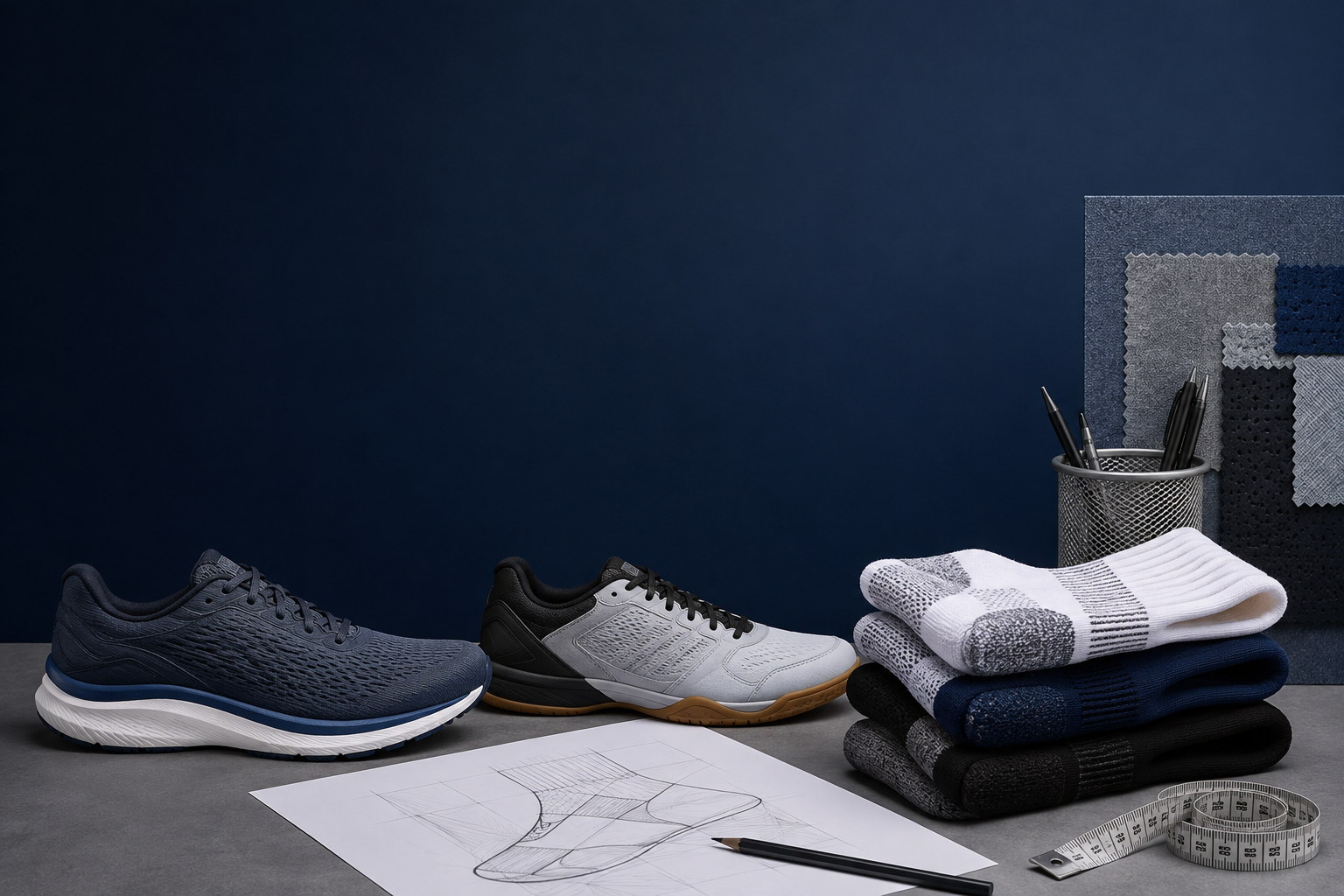
Direct answerChoose athletic sock construction from the activity, footwear, climate and review criteria—not from a feature list alone. Define the required height, mesh, terry, support, reinforcement, yarn direction and logo placement, then confirm those decisions on a physical sample.
Start with the activity and footwear
Begin with the movement pattern, session length and footwear used by the wearer. A running sock may need a different balance of ventilation, cushioning and heel placement than a basketball or volleyball sock. Training products can serve several exercises, so the brief should identify the dominant use rather than simply call the product performance.
Record climate, expected wear frequency and whether the sock is worn with a close-fitting or roomy shoe. These details affect how much material can be added without changing the fit. They also give the factory a reason for each construction decision and help the buyer review a sample against the intended use.
- Primary sport
- Session length
- Footwear type
- Climate
- Wear frequency
Choose sock height from the product job
Sock height affects branding space, coverage and the relationship between the cuff and the shoe. No-show, ankle, crew and taller team styles should be selected from the product brief, uniform requirements and wearer preference. A taller sock may provide more visual space for a team design, while a shorter style may fit a low-cut shoe better.
Show the target height on a drawing and define where the measurement begins and ends. Do not rely on a product name alone because factories and buyers can use terms such as crew or quarter differently. Confirm the height on the sample in a relaxed state and in the intended shoe.
- Height category
- Measurement landmarks
- Uniform requirement
- Branding area
- Sample check
Place mesh and terry where they solve a problem
Mesh zones are commonly considered for heat release and airflow, while terry zones add a thicker, softer structure in selected areas. The important decision is placement: a buyer should identify whether the top of the foot, forefoot, heel or sole needs a different knit structure and why.
Avoid describing the whole sock with one word such as breathable or cushioned. A product can use mesh on the instep and terry under the foot, but the result still depends on yarn, knit density, shoe volume and fit. Ask the factory to show these zones on a construction map before sampling.
- Instep mesh
- Forefoot structure
- Heel and sole zones
- Knit transition
- Shoe volume
Set support and reinforcement expectations
Arch support and reinforced heel or toe areas should be specified as construction features, not as medical or claimed performance claims. Mark the support band location, intended stretch and visual width. For reinforcement, identify the wear zone and whether the goal is appearance, comfort, product consistency or a combination.
A athletic sock specifications should check whether the band sits in the intended place, whether it feels too tight for the target size and whether the reinforced zone changes the shoe fit. A simple drawing and measurement note make this discussion clearer than a general request for extra support.
- Support location
- Stretch expectation
- Wear-zone map
- Comfort check
- Fit confirmation
Match yarn direction to the construction
Yarn selection should follow the use case and the construction rather than being chosen as a slogan. Cotton, polyester, nylon, spandex and bamboo blends can be considered according to hand feel, moisture-management goals, stretch, appearance, care expectations and target cost. The factory should flag when a requested blend conflicts with the intended knit structure or packaging requirement.
Write the material direction as a preference with an approval step. If a substitution is proposed, compare it on the physical sample and record the accepted version. This keeps the article practical without claiming that one fiber is automatically right for every sport.
- Fiber direction
- Hand feel
- Stretch and recovery
- Care expectation
- Substitution approval
Design for the logo and team identity
Logo method and construction need to be planned together. Jacquard, embroidery, printing and woven labels have different implications for detail, placement and the surface of the sock. A logo crossing a mesh zone or a highly textured terry area may need a different size or location than the same logo on a smooth leg.
Provide vector or high-resolution artwork, fixed placement landmarks and a color reference. Review legibility when the sock is stretched and confirm that the final sample uses the approved file version. This creates a useful bridge between design intent and production instructions.
- Logo method
- Placement landmark
- Artwork version
- Color reference
- Stretch legibility
Build a sample review around the sport
A sample should be reviewed in the context in which it will be worn. Check size, cuff height, heel position, toe finish, mesh and terry placement, support band position, logo clarity and packaging presentation. If possible, use the intended shoe or a comparable shoe during the fit review.
Record pass, revise or open decision for each item. Note whether a change is required for comfort, appearance, construction consistency or packaging. A structured review prevents a buyer from giving broad feedback such as make it more athletic, which cannot be translated reliably into a production change.
- Intended shoe
- Measurement check
- Construction zones
- Logo review
- Actionable feedback
Turn the choice into a production brief
The final brief should connect the activity to measurable decisions: Keep the same terminology in the quote request, sample comments and purchase order so the approved structure remains traceable across the project. The final brief should connect the activity to measurable decisions: sport and footwear, sock height, size range, mesh and terry map, support and reinforcement zones, yarn direction, logo files, color references, quantity breakdown, packaging and approval criteria. Keep the approved sample and document version together.
For a custom project, BEZENTO's MOQ starts from 300 pairs and final requirements depend on design, materials, construction and packaging. Sampling is about 7 days excluding sample shipping. State the milestone that starts the timing and keep transport separate from production planning.
- Construction map
- Material direction
- Artwork files
- Quantity breakdown
- Approval gate
Compare two construction options deliberately
When the brief is uncertain, ask the factory to prepare two clearly labelled options rather than asking for an undefined premium version. Option A might use a lighter instep and localized sole structure; option B might use more continuous terry or a different support layout. Compare them on the same shoe, size and color so the review isolates construction rather than introducing several changes at once.
Record what the buyer learned from the comparison. The preferred option should identify the zone, reason and acceptance evidence. This makes the decision useful for the quotation, artwork placement and repeat order instead of treating the sample as a one-time visual exercise.
- Option labels
- Same shoe and size
- Single-variable comparison
- Acceptance evidence
- Repeat-order note
Plan the buyer handoff
Once the construction is selected, prepare a concise handoff for sourcing, design and quality control. Include the sport scenario, footwear reference, size range, height measurement, mesh and terry map, support and reinforcement notes, yarn direction, artwork version and packaging requirement. Add the sample approval date and list any accepted deviations.
This handoff is especially useful when a brand works with several team members or changes from development to purchasing. It gives each person the same product reference and reduces the chance that a later quote or artwork revision silently changes the construction.
- Sport scenario
- Approved construction
- Artwork version
- Packaging requirement
- Accepted deviations
Use buyer language that can be manufactured
Replace broad requests with observable instructions. Instead of asking for a high-performance sock, specify the sport, shoe, height, zone map, yarn direction, logo position and the point that must be approved. If comfort is important, state where the wearer should feel the difference and how the sample will be reviewed.
This language keeps the article educational and gives the factory a practical starting point. It also helps a sourcing team compare two suppliers because each supplier is responding to the same construction brief rather than interpreting a marketing phrase differently. Keep this reference with the approved artwork and packaging files. This preserves the decision for later production checks. Buyers can reuse this checklist for repeat orders.
- Observable requirement
- Sport context
- Zone location
- Review method
- Comparable brief
Buyer Questions
Is one athletic sock construction suitable for every sport?
Not usually. Construction should reflect movement, footwear, climate, coverage and the buyer's review criteria.
Does more terry necessarily mean a better sports sock?
No. Added thickness can affect shoe volume and fit. Place cushioning where it supports the product brief and confirm it on a sample.
How should buyers specify mesh?
Show the mesh zone on a drawing, state the intended purpose and review the transition, stretch and shoe fit on the sample.
When should support and reinforcement be approved?
Approve their location, feel, size interaction and appearance during sample review before confirming the production reference.
Can the same design use different constructions by size?
It can be considered, but the size range and construction change should be documented and sampled so the buyer can compare the result.
Discuss Your Custom Sock Requirements
Send your product type, artwork, quantity, size range, packaging, destination and target date for a practical project review.