
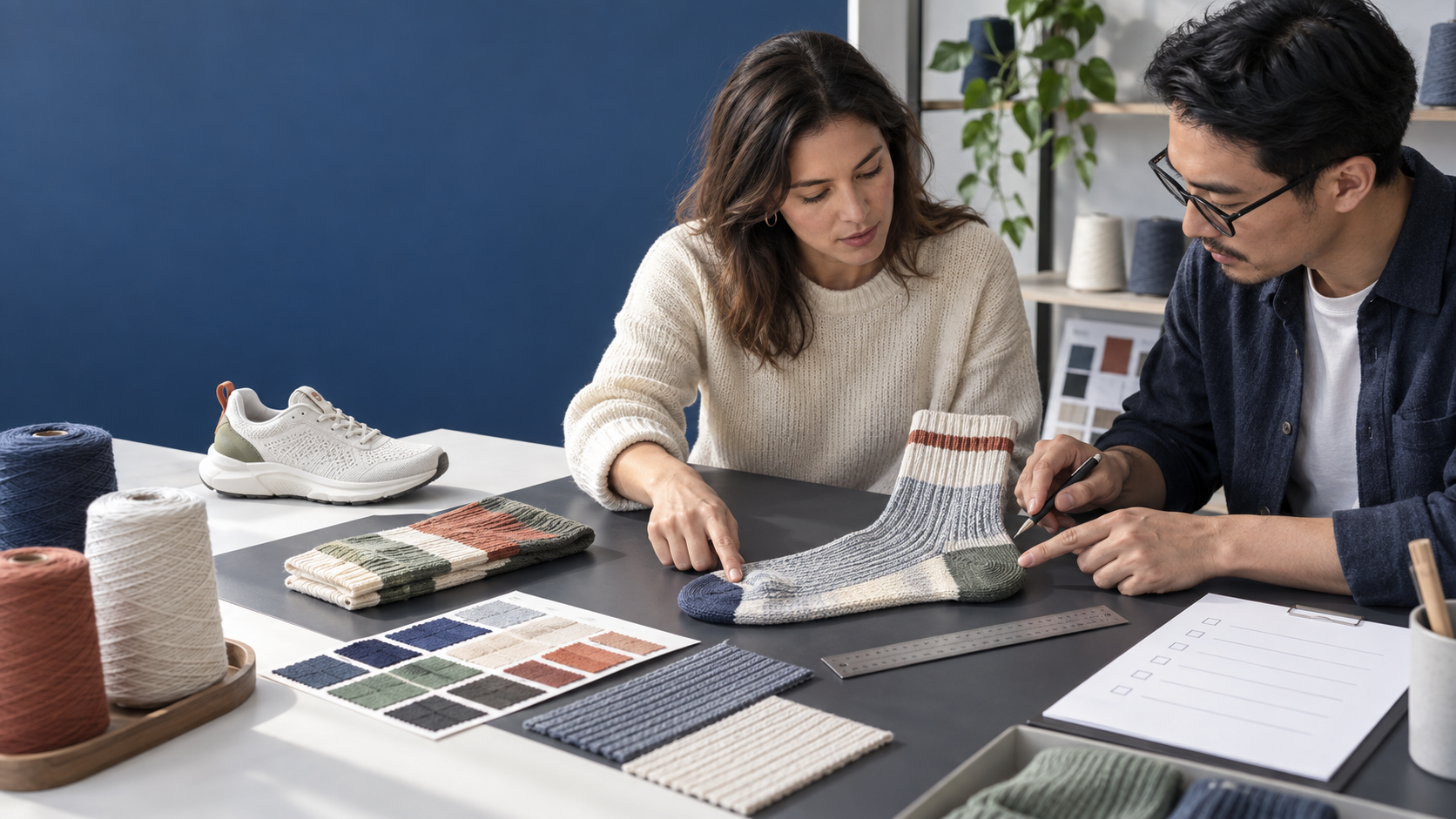
Direct answerUseful custom sock sample feedback identifies the exact location, describes what was observed, states the requested direction, defines the affected size or color scope and cites the sample version. It separates fit, construction, material, color, artwork and packaging comments so the factory can make a targeted change and the buyer can verify the result on the next sample.
Start with the sample version and review context
Before writing comments, identify the why sock samples need revisions, date, size, color and footwear or activity used for review. A sock can feel different in a flat photo, on a fitting form and inside the intended shoe. Without context, the factory may correct the wrong sample or repeat a condition that caused the issue.
Attach a clear photo or measurement sheet when it helps, but keep the written note as the source of the decision. Mark the front, back, left, right, cuff, heel, toe, sole and instep so a remote reviewer can locate the same area. If the design has different left and right socks, label both.
Use one comment for one decision whenever possible. Separate a fit problem from a color observation and an artwork change. This makes the revision list easier to assign and prevents a minor comment from hiding a critical approval point.
- Sample number
- Size and color
- Review date
- Shoe or activity
- Photo or measurement reference
Use the five-part feedback format
A practical comment contains five parts: location, observation, requested direction, scope and reference. For example: heel pocket, sample sits below the marked landmark in size M, move the position upward to the approved drawing, apply to the core sizes, why sock samples need revisions S2. This is more actionable than the comment heel is wrong.
The observation should describe what happened without guessing at the cause. A buyer can report that the cuff rolls during the shoe test, while the factory can decide whether the cause is rib structure, recovery, height or finishing. Keeping observation and proposed cause separate makes technical discussion clearer.
If the buyer has a preference rather than a fixed requirement, label it as a preference. The factory can then propose an alternative and explain the effect on cost, timing or construction instead of treating a preference as an unexplained pass/fail rule.
- Exact location
- Observed condition
- Requested direction
- Size/color scope
- Sample reference
Comment on fit with measurable landmarks
Fit feedback should connect the feeling or visual observation to a landmark or measurement. Identify whether the issue is at the cuff, leg, instep, heel pocket, toe, sole or seam. Note whether the sock was relaxed, stretched or worn in the intended shoe.
Instead of writing too tight, describe where and when the pressure appears, which size was tested and what change is requested. Instead of too loose, state whether the problem is recovery, circumference, foot length or a localized position. The factory can then test the relevant construction rather than changing the entire sock.
If several sizes are affected, list the pattern. If only one size is affected, say so. This distinction helps the factory decide whether to adjust the base measurement or the grading step. Keep the approved sock size grading beside the comments for comparison.
- Fit location
- Measurement landmark
- Worn condition
- Affected size
- Requested construction change
Separate construction and material comments
Construction comments explain what should change in the knit structure, placement or finish. Material comments explain the yarn, hand feel, color behavior or substitution. They interact, but they should be written separately so the next sample has a controlled change list.
For example, record mesh coverage, terry depth, arch-band position, heel reinforcement and toe finish as construction observations. Record softness, stretch, yarn appearance or a proposed blend change as material observations. Ask the factory to confirm which input will be changed and which will remain stable.
If the change affects thickness or shoe clearance, repeat the fit check. A material adjustment that feels minor on a table can change the foot volume inside a close-fitting shoe. State which test should be repeated after the revision.
- Knit zone
- Material direction
- Stable variables
- Change input
- Repeat test
Make color and artwork feedback traceable
Color comments should name the reference and zone. Too dark is incomplete unless the buyer says which color, against which standard, under which viewing condition and on which part of the sock. If the issue is only visible after stretching, record that condition.
Artwork comments should cite the file version, method, size and fixed placement landmark. State whether the problem is scale, legibility, orientation, position or interaction with mesh and terry. Do not send a new file without explaining which earlier version it replaces.
When several colors or logo versions are being reviewed, use a table with one row per item. This avoids approving one swatch while the factory is working from another and gives the quality team a clear record for bulk inspection.
- Color standard
- Viewing condition
- Artwork version
- Placement landmark
- Replacement file
Use evidence without overclaiming
A sample review should record what was checked and what was observed. Photos, flat measurements, shoe-test notes, color references and side-by-side comparisons can support a decision. They do not turn one sample into proof of a universal performance result.
Avoid medical or absolute language. Describe comfort, fit, surface, construction and appearance in the tested context. If a buyer needs a specific technical performance claim, define the test method and evidence separately with the factory or a qualified testing partner.
Keep accepted deviations visible. A buyer may accept a small visual variation while requiring a fit change, or accept a packaging adjustment while holding the logo for revision. Record each decision independently rather than using one overall good or bad judgment.
When evidence is incomplete, mark the item open instead of forcing a pass or fail. For example, a color may need to be checked under the agreed light, or a fit comment may need a second shoe test. An open item should have an owner and a next action so it does not disappear between sample rounds.
- Evidence type
- Test context
- Observed result
- Accepted deviation
- Separate approval decisions
Close the feedback loop with a reply and next action
After sending comments, ask the factory to confirm the understood changes, the next why sock samples need revisions and any effect on timing or materials. This reply is part of the approval record, especially when feedback is exchanged across multiple people or channels.
Rank the changes by importance: must correct before approval, required for bulk, preferred if practical or open for factory recommendation. A clear priority helps the factory resolve the decisions that affect fit, construction and compliance before spending time on cosmetic preferences.
When the next sample arrives, review it against the previous comments line by line. Close each item as accepted, still open or changed by agreement. This prevents an old comment from reappearing and shows why the final sample was approved.
- Factory confirmation
- Priority
- Timing effect
- Line-by-line closure
- Next approval gate
Keep a reusable sample feedback template
A reusable template should include product name, why sock samples need revisions, size, color, review condition, comment number, location, observation, requested direction, scope, priority, owner and due date. Add a field for the approved reference or drawing so each comment points to evidence.
Use the same template for the first sample, revisions and repeat-order changes. A consistent format helps a new buyer or inspector understand the history without reopening every chat message. It also makes recurring issues visible across orders without turning one observation into a universal claim.
The most useful feedback is specific enough to act on and modest enough to stay true to the evidence. It gives the factory a clear next step, gives the buyer a fair basis for approval and keeps the final product aligned with the version that was actually reviewed. Before closing the review, save the comments, photos, measurement sheet and factory reply in one dated folder. This small handoff step prevents a later team member from working from a screenshot or an outdated sample number. It also makes repeat orders easier to brief.
- Product and version
- Review condition
- Location and observation
- Priority and owner
- Approval reference
Buyer Questions
What is the most useful format for custom sock sample feedback?
Use location, observation, requested direction, affected scope and sample version. Add the reference drawing or measurement when relevant.
Should buyers send photos with their comments?
Yes, when they clarify location or appearance, but keep the written observation and sample ID so the decision remains traceable.
How should feedback describe a fit issue?
State the body zone, size, worn or relaxed condition, observed issue and requested change rather than only saying too tight or too loose.
Should fit, color and artwork comments be combined?
Keep them as separate comments with separate decisions. This allows the factory to change one variable at a time where practical.
What should happen after the revised sample arrives?
Review each previous comment line by line and mark it accepted, still open or changed by agreement, then update the approved sample version.
Discuss Your Custom Sock Requirements
Send your product type, artwork, quantity, size range, packaging, destination and target date for a practical project review.