Direct answerCustom sock samples usually need revisions when the brief leaves a measurable decision open or when the sample is reviewed against a different expectation. Common causes include unclear construction zones, incomplete size and color information, artwork changes, material substitutions, packaging assumptions and feedback that does not identify the exact location or requested direction. A versioned specification and a structured review can reduce avoidable cycles without treating every revision as a factory failure.
Separate a useful revision from an avoidable one
A sample revision is not automatically a problem. Development often reveals a fit, construction or appearance decision that could not be confirmed from a drawing. The useful question is whether the revision produces new information and moves the product toward an agreed approval, or whether the same uncertainty was repeated because the brief or useful sample feedback was incomplete.
Classify the request before sending it to the factory. A specification gap means a requirement was missing; a construction adjustment means the requirement was clear but the proposed structure needs changing; a production correction means the sample did not match the approved direction. These categories help the buyer choose the next action and avoid blaming the wrong part of the process.
Keep the sample number, request date and decision owner with every revision. This gives the design, sourcing and quality teams a common record and makes it easier to compare what changed between versions.
- Reason for revision
- Sample version
- Exact location
- Requested direction
- Decision owner
An incomplete construction brief creates uncertainty
Words such as premium, breathable or supportive do not tell a knitting factory exactly where a construction should change. If the brief does not show cuff, leg, heel, toe, mesh, terry, reinforcement, logo and seam requirements, the factory must interpret the missing areas. The first sample may then become a discovery exercise rather than a controlled check.
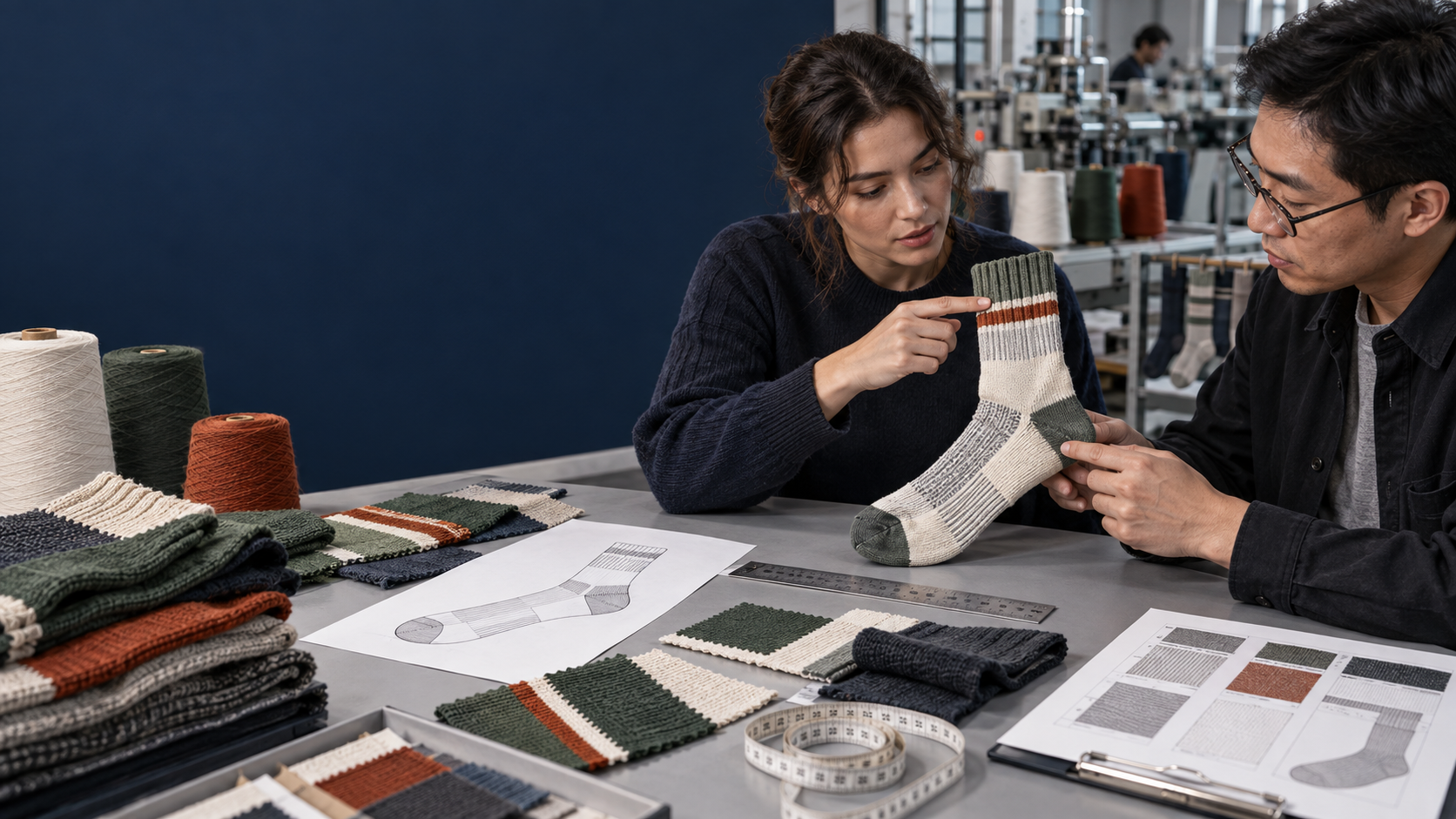
Use a flat drawing or annotated reference to map the sock. Identify the intended height, toe finish, heel shape, cushion zones and any left/right difference. If the factory may recommend an alternative, label it as an open option rather than allowing it to become an unrecorded assumption.
Review the custom sock tech pack before sampling and ask the factory to return its assumptions. A short clarification at this stage is easier to resolve than a revision after the sock has been knitted and evaluated in a shoe.
- Construction map
- Zone boundaries
- Seam and finish
- Alternative options
- Factory assumptions
Sizing and grading gaps often appear in the first sample
A sample can look correct while still being wrong for the planned size range. Problems arise when foot length, cuff height, key widths, measuring condition or size grouping is not stated. A single prototype then becomes the reference for a range that was never properly graded.
State the representative size and the size boundaries that need review. Identify whether measurements are relaxed, lightly stretched or worn, and use the same method for the next sample and inspection. If a support band, logo or mesh panel moves with size, show how its position is expected to change.
When requesting a correction, name the size and location rather than writing the sample is too small. This tells the factory whether to change the base measurement, grading step, stretch behavior or a localized construction.
- Foot length
- Size grouping
- Measurement condition
- Grading direction
- Size-specific observation
Material and thickness changes can alter the whole result
A yarn substitution, density change, terry depth change or finishing adjustment can affect more than hand feel. It may change color appearance, logo clarity, stretch, fit, packaging fold and the way the sock sits in the shoe. If the factory proposes an alternative, record the change and reopen the relevant sample checks.
Ask for the material version and construction direction in the sample notes. Do not assume that a fiber percentage alone predicts the finished behavior. Compare the proposed sample with the approved direction in the zones that matter, especially when a mesh instep meets a denser sole or when a logo crosses texture.
Keep one variable stable where the launch schedule allows. Changing yarn, thickness, logo size and grading in a single revision makes it difficult to know which change solved the problem and can create a new round of uncertainty.
- Material version
- Yarn construction
- Thickness zones
- Substitution record
- Controlled variables
Artwork and color decisions are common revision triggers
Artwork files can create revisions when the factory receives a working file instead of the approved version, when the logo is too detailed for the chosen method or when placement is described without fixed landmarks. A logo may also lose clarity when it crosses mesh, terry or a curved area of the sock.
Use versioned artwork with dimensions, colors, orientation and placement landmarks. Confirm whether the artwork is knitted, printed, embroidered or handled by another method. Review the logo on the actual sock in relaxed and lightly stretched states instead of approving only a flat screen image.
Color useful sample feedback should identify the reference and location. Too dark is less useful than too dark against the named standard on the cuff and body under the agreed viewing condition. This level of detail helps the factory make one targeted adjustment.
- Artwork version
- Method and size
- Placement landmarks
- Color reference
- Stretch review
Packaging and commercial assumptions can force a late revision
A sock sample may be accepted visually and still require changes because packaging, label content, pair count or barcode responsibility was not confirmed. Folding dimensions can expose a logo or change the presentation, and a packaging component supplied by the customer may not match the factory's working assumption.
Include packaging format, label content, pack quantity, folded dimensions and file ownership in the brief. State whether BEZENTO or the customer is developing the packaging, and name the person who approves the final file. Keep packaging approval separate from sock construction approval but connect both to the same product version.
Commercial timing can also create revision pressure. Sampling is about seven days excluding sample shipping at BEZENTO, while bulk timing starts after the relevant approvals and requirements are confirmed. Define the milestone so a late packaging change is not mistaken for a knitting delay.
- Packaging format
- Label and barcode owner
- Folded dimensions
- Pack quantity
- Approval milestone
Vague feedback repeats the same revision cycle
Feedback such as make it better, use a softer yarn or the logo is not right does not give the factory a checkable next action. The supplier may make a reasonable interpretation, but the buyer may be evaluating a different detail. The result is another sample with a new disagreement rather than a resolved issue.
Use a five-part note: location, observed condition, requested direction, size or color scope and reference version. For example, identify that the heel sits below the agreed landmark in size M, request the approved position, state whether all sizes are affected and cite the sample number.
Ask the factory to repeat the requested change in its reply. This confirmation is especially useful when the buyer, designer and factory communicate across time zones or languages. It turns a conversation into a production instruction that can be checked on the next sample.
- Location
- Observation
- Requested direction
- Scope
- Reference version
Use a pre-sampling and post-sample checklist
Before sampling, confirm the product use, shoe, custom sock tech pack, sizes, yarn direction, colors, artwork, packaging, quantities and approval owner. After the sample arrives, review measurements, fit, construction, color, logo, pairing and packaging against the same brief. Mark each point pass, revise or not applicable.
If a revision is required, change the sample version and preserve the prior record. Do not overwrite the approved artwork or measurement table. A dated change log helps the next reviewer understand why the factory changed a construction and prevents an obsolete file from returning to the order.
The goal is not to eliminate every development revision. It is to make each revision specific, traceable and proportionate to the issue. That gives the factory a clear next step and gives the buyer evidence for the final bulk approval. It also protects the timeline when several people share the review.
- Pre-sampling checklist
- Pass/revise decision
- Change log
- Version control
- Bulk approval link
Buyer Questions
Is a sample revision necessarily caused by a factory mistake?
No. Some revisions reveal a design decision that could not be confirmed earlier. Classify the cause before deciding on the corrective action.
What information reduces avoidable sock sample revisions?
Use a construction map, size and grading table, material direction, color reference, artwork version, packaging brief and named approval criteria.
How should a buyer describe a sample problem?
State the exact location, observation, requested direction, size or color scope and sample version.
Should several changes be requested in one revision?
Separate variables when possible. Changing yarn, thickness, artwork and grading together makes the next result harder to interpret.
What should happen after a revision is accepted?
Update the sample version and change log, keep the accepted reference with the tech pack and carry the approved details into the bulk inspection record.
Discuss Your Custom Sock Requirements
Send your product type, artwork, quantity, size range, packaging, destination and target date for a practical project review.