Direct answerA usable custom sock tech pack should identify the commercial and technical decisions that affect sampling, quoting and inspection. It should be readable by a designer, buyer and factory contact. A usable custom sock tech pack should identify the product purpose, size range, construction map, yarn direction, colors, artwork and placement, packaging, quantity breakdown, approval criteria and delivery requirements. Each item should reference a file, measurement or decision so the factory can identify assumptions before sampling.
Start with the product brief
State what the sock is for, who will wear it and which footwear or environment matters. Running, studio, lifestyle, teamwear and promotional products can require different priorities for thickness, stretch, ventilation and appearance.
Separate non-negotiable requirements from preferences. This gives the factory a clear decision order when comfort, cost, appearance and production practicality need to be balanced. It also makes later quote revisions easier to audit and hand over clearly to the next production contact and inspector.
- Product use and wearer
- Footwear and climate
- Target size range
- Retail or team position
- Must-have requirements
Map the sock construction
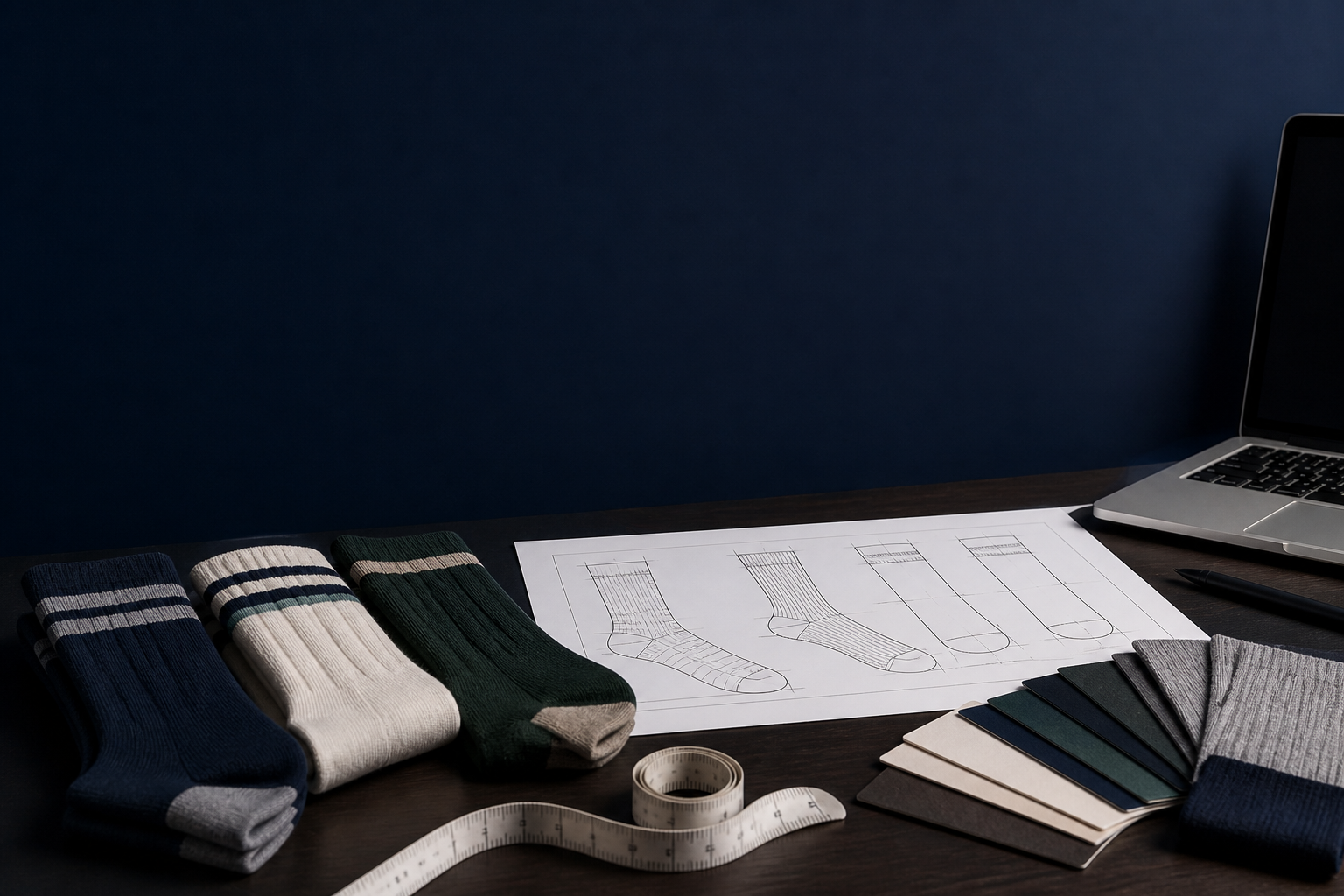
Show cuff, leg, heel, toe, sole, mesh, terry, reinforcement, support or grip zones on an annotated sketch or reference image. Mark logo placement from fixed landmarks such as the cuff edge, heel turn or toe seam.
Include toe finish, seam preference, left/right construction and the intended sock height. A pre-sampling checklist is more actionable than broad words such as premium or performance. It gives the factory a checkable interpretation of the design and gives the buyer a reference when reviewing the first sample.
- Cuff and leg
- Heel and toe
- Sole and ventilation zones
- Reinforcement
- Logo landmarks
Specify materials and colors
Name the target yarn direction, hand feel, thickness and care expectations, but allow the factory to flag substitutions. Blend ratio, yarn construction, knit density and finishing can all change the final result.
Provide a physical or standardized color reference where possible. Record which color variation requires approval and which practical variation is acceptable for the project.
- Yarn direction
- Hand feel and thickness
- Color reference
- Care assumptions
- Substitution approval
Attach artwork and packaging files
Send vector or high-resolution artwork file guide with file version, dimensions, colors, orientation and placement. Note whether the logo must remain legible when the sock is stretched or crosses a textured zone.
Include packaging format, label content, barcode responsibility, folded dimensions and pack quantity. Packaging can be developed by BEZENTO or supplied by the customer, but the final file and approver should be recorded.
- Artwork version
- Logo method and size
- Color information
- Packaging format
- Label and barcode owner
Add quantities, timing and approval rules
Include pairs by style, color and size, sample destination, target date and any shipping or warehouse requirement. BEZENTO's MOQ starts from 300 pairs; final requirements depend on design, materials, construction and packaging.
BEZENTO's standard sampling estimate is about 7 days excluding sample shipping. State how measurements, logo, color, construction and packaging will be reviewed, then keep the approved sample and final tech pack together.
- Quantity breakdown
- Sample destination
- Target date
- Approval criteria
- Final reference pack
Turn sketches into measurable instructions
A buyer does not need to predict every knitting setting, but the document should define the result that must be checked. Add a flat measurement table for foot length, leg height, cuff height and key widths. Identify the measuring condition, such as relaxed or lightly stretched, and use the same method for the sample and production inspection.
If a measurement is still undecided, label it as an open point rather than hiding it in a reference image. Ask the factory to propose a practical value, then record the accepted value and version date. This prevents a sample discussion from becoming a series of vague visual comments.
- Measurement name
- Reference point
- Measuring condition
- Accepted range
- Open-point owner
Control artwork and version changes
A tech pack should make it impossible to confuse the current logo with an earlier file. Give every artwork file guide file a version number, date, color reference and placement diagram. State whether the artwork is knitted, printed, embroidered or applied by another method, and show the minimum size at which details must remain recognizable.
Keep a change log for revisions. Record when the logo moves from the cuff edge, a background color changes, or the right and left socks become different. A written change log helps the buyer, designer and factory review the same decision and reduces the chance of producing an obsolete file.
- Artwork version and date
- Method and dimensions
- Placement landmarks
- Color reference
- Change log
Define the approval gate before sampling
List the exact questions that must be answered when the sample arrives: Is the size within the agreed measurement range? Does the logo sit on the intended landmark? Does the yarn and knit structure match the approved direction? Are cuff, heel, toe and packaging details correct?
Name who can approve or request a revision, and specify the evidence they will use, such as a measurement sheet, fit photo or color comparison. Approval should identify the sample version and any accepted deviations. Without this gate, a factory may receive contradictory feedback from different stakeholders.
- Inspection questions
- Approval authority
- Evidence required
- Accepted deviation
- Approved sample version
Use a one-page handoff checklist
Before sending the pack for a quote, check that a new person could understand the product without a meeting. The folder should contain the brief, pre-sampling checklist, measurement table, material direction, artwork file guide files, color references, packaging files, quantity breakdown and target milestones.
Ask the factory to return a list of assumptions and missing decisions. Review that list before sampling, because a short clarification at the quotation stage is less expensive than a revision after knitting, labeling or packing. The tech pack is complete when the buyer and factory can point to the same file for every material decision.
- Brief and use case
- Construction and measurements
- Materials and colors
- Artwork and packaging
- Assumptions confirmed
Include the information a sample reviewer needs
Add a review page to the end of the pack. It can show the flat sock drawing, the measurement points, the color references and a small approval table. For each point, leave space for pass, revise or not applicable, plus a comment and date. This makes feedback usable when several people review the same sample remotely.
For fit-related products, include the footwear or activity used during review. A running sock checked with a casual shoe may lead to the wrong conclusion about heel position or thickness. The review page should describe the test context without claiming a performance result that has not been measured.
- Review drawing
- Measurement points
- Color references
- Test context
- Decision and date
Protect the handoff from hidden assumptions
A clear tech pack states what is not included as well as what is included. Note whether the customer supplies labels, packaging, barcodes, legal copy or test requirements. If a requirement is undecided, assign an owner and a decision date. This is more useful than leaving a broad note such as final details to be confirmed.
At handoff, request a written assumption list from the factory. Compare it with the buyer's version and resolve differences before sampling. The resulting file becomes the reference for the quotation, sample review and bulk order, while later changes can be tracked as new versions.
- Included items
- Excluded items
- Open decisions
- Decision owner
- Assumption list
Make the file easy to use after approval
Export a dated PDF for review and keep editable artwork file guide, measurement sheets and packaging files in the same versioned folder. Use consistent filenames so a buyer can distinguish the approved sample from a working file. When a revision is approved, archive the prior version instead of overwriting it.
This simple file discipline supports repeat orders. It also helps a buyer brief a new colleague, retailer or inspection partner without reopening every design discussion. A future buyer or merchandiser can see which decisions were approved and which details were project-specific. It also gives the factory a clear source when a repeat order uses the same construction but changes color, quantity or packaging.
- Dated PDF
- Editable source files
- Consistent filenames
- Archived revisions
- Repeat-order reference
Buyer Questions
Is a tech pack required for every custom sock order?
A formal document can be simple for a basic order, but the key product, artwork, quantity, packaging and approval decisions should be recorded for the order.
Can BEZENTO help complete the tech pack?
BEZENTO can work from customer-supplied artwork or help develop the design direction. The final construction and sample still need written approval. Written approval protects both sides.
What is the most commonly missing tech-pack item?
Buyers often omit fixed logo landmarks, size measurements, quantity breakdown, packaging responsibility or the sample approval criteria.
Should the tech pack include pricing?
It should include the quantities and specifications needed for a comparable quote. Pricing itself belongs in the commercial quotation and order confirmation.
When should the tech pack be updated?
Update it whenever yarn, construction, artwork, sizing, packaging or quantities change, and identify the new version before approval.
Discuss Your Custom Sock Requirements
Send your product type, artwork, quantity, size range, packaging, destination and target date for a practical project review.