Direct answerChoose yarn from the intended use, required hand feel, stretch and recovery, drying expectations, color direction, durability priorities and target cost—not from a fiber name alone. Blend ratio, yarn construction, knit density and finishing all change the finished sock, so the final decision should be checked on a sample made with the intended construction.
Start with the product use case
A studio sock, athletic sock, work sock and fashion multipack do not need the same material balance. Begin with the activity, footwear, climate, expected wear pattern and target retail position before naming a fiber.
Write the priority in observable terms. ‘Soft hand feel with controlled bulk’ or ‘a firm cuff that recovers after wear’ gives a supplier a more useful direction than ‘higher-end yarn’ without a measurable product context.
Separate must-have requirements from preferences. For example, a school uniform may require a fixed color and size range, while a lifestyle launch may prioritize a softer hand feel and a premium appearance. This ranking helps the factory resolve trade-offs without guessing.
Describe the failure you want to avoid: slipping in a shoe, excessive heat, visible pilling, a loose cuff or a logo that distorts. A concrete risk is easier to review in a sample than a broad claim such as ‘target performance.’
- Activity and footwear
- Indoor or outdoor conditions
- Target wearer and size range
- Expected wear and care routine
- Hand feel, bulk and cost priorities
Fiber names are only the starting point
Cotton, polyester, nylon and elastane each suggest different properties, but the fiber name does not fully predict the finished sock. Blend ratio, yarn count, spinning method, knitting density and finishing can change softness, strength, recovery and appearance.
Ask the factory to state the proposed blend and any planned substitution. If a material changes after sampling, review the sock again instead of assuming the original approval still applies.
Request a plain-language material sheet for the sample: blend direction, yarn construction, stretch component, color reference and care assumptions. This creates a traceable baseline for later production and makes supplier comparisons fairer.
Avoid treating a generic percentage as a expected performance value. The same nominal blend can behave differently when stitch density, terry depth, reinforcement and finishing change. Approval should therefore reference the complete sock construction.
- Proposed fiber blend
- Yarn construction or count direction
- Stretch component and recovery expectation
- Knit density and thickness
- Finishing or treatment notes
Match yarn priorities to the wearer experience
A softer yarn direction may support a gentle hand feel, while a stronger yarn direction may be useful where abrasion is a concern. Neither label proves a result on its own. The final result also depends on the sock map, seams, heel and toe construction and the shoe.
For athletic products, discuss drying and ventilation as construction goals rather than making an unsupported moisture claim. For private-label or fashion products, color consistency, surface appearance and packaging presentation may be equally important.
Evaluate the sock on the body, not only on a table. Put it on the intended foot size, walk in the intended shoe and note pressure, bunching, heat and cuff recovery. Record observations separately for new, stretched and washed samples when those checks matter.
Use a simple buyer scorecard with pass, revise or not applicable for each requirement. It prevents one attractive feature—such as softness—from hiding a problem with fit, logo stability or production repeatability.
- Hand feel when worn
- Stretch and shape recovery
- Abrasion and reinforcement zones
- Drying and ventilation expectations
- Color and surface appearance
- Care-label requirements
Check yarn against construction and branding
The same yarn direction can look and feel different in a smooth knit, terry sole, mesh panel or grip sock production guide. Logo size and placement also interact with stretch and surface texture. Review artwork on the actual construction, especially where a mark crosses ribbing, mesh or a cushioned zone.
Include the yarn direction, custom athletic sock specifications and logo notes in one start an inquiry. That gives the factory a clear basis for discussing machine setup, sample appearance and any effect on packaging dimensions.
Ask for the placement to be described from fixed landmarks—cuff edge, heel turn, toe seam or side line—rather than only by a visual screenshot. This is especially useful when the sock stretches during wear.
For color-critical launches, provide a physical or standardized color reference and define what variation is acceptable. A screen color alone is not a reliable production standard, so the approval record should identify the reference used.
- Smooth, terry or mesh construction
- Cuff, heel and toe structure
- Logo method and stretch zone
- Color references
- Packaging and folded dimensions
Use sampling to make the final decision
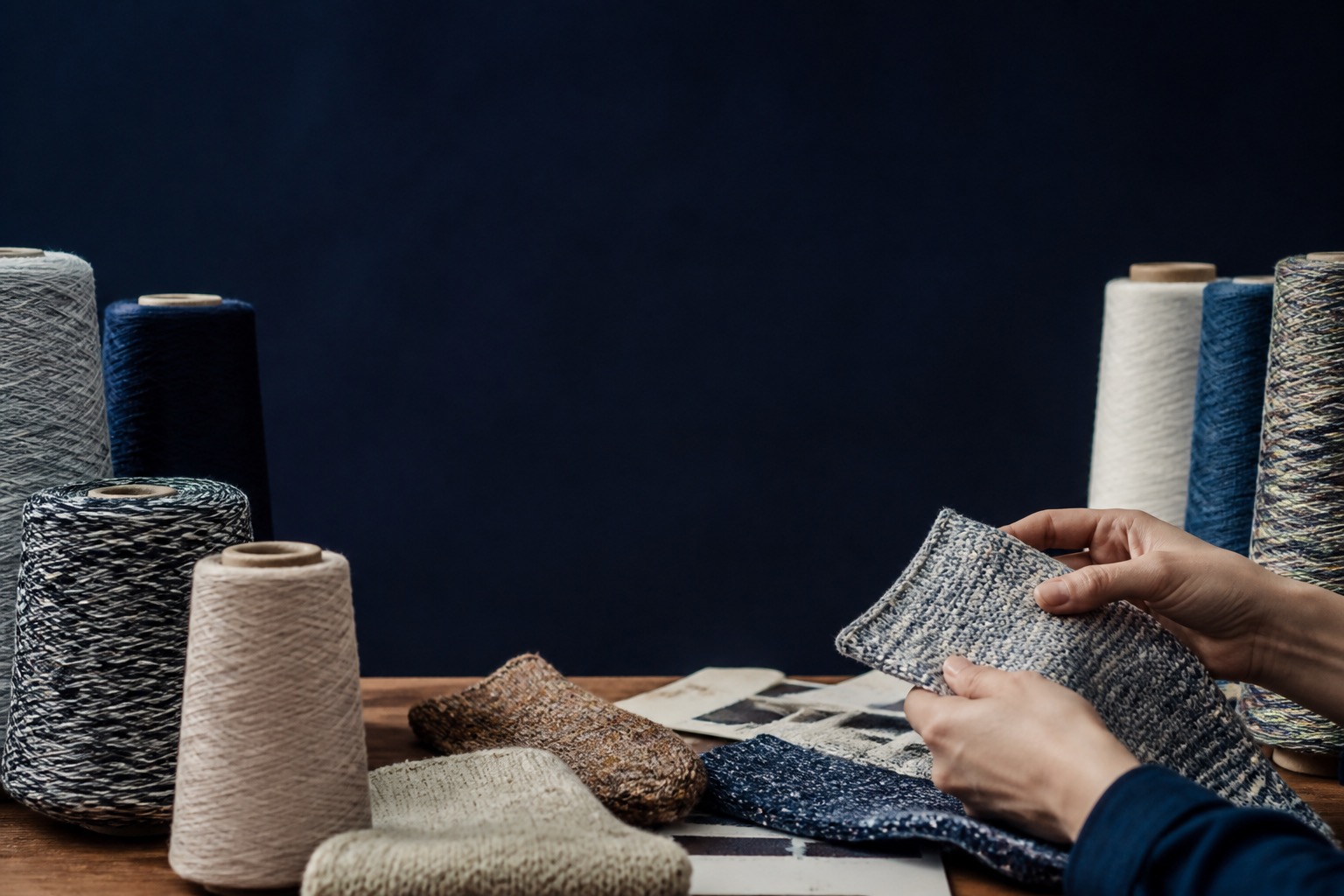
A material choice should be approved on the intended sock, not from a loose yarn cone or a generic stock sample. Compare the relaxed and stretched sock, check the heel and toe position, inspect the inside finish and wear it with the intended footwear when practical.
BEZENTO's standard sampling estimate is about 7 days, excluding sample shipping time. Revisions, special materials and complex construction may require additional time. Keep the approved material and construction reference with the purchase order.
Mark every revision clearly: sample date, material direction, size, construction, artwork version and comments. If two variables change at once, it becomes difficult to know which change caused an improvement or problem.
Before bulk approval, ask what is held constant and what can vary within normal production. Confirm the final quantity breakdown, packaging direction and inspection points so the approved yarn choice survives the handoff to production.
- Compare the intended size and construction
- Check relaxed and stretched appearance
- Review hand feel and bulk in footwear
- Confirm color and logo clarity
- Record approved material details
- Keep the approved sample as reference
Turn the choice into an approval record
A useful yarn decision is repeatable. Capture the chosen material direction together with the sock map, size, color reference, logo version and care assumption so a second buyer can understand why it was selected.
For a small launch, compare two or three realistic options rather than collecting an unlimited list. Score each option against hand feel, fit, appearance, durability priority, cost direction and production risk, then ask the factory to explain any trade-off.
Keep open questions visible until they are answered. If the blend, construction or finishing is still provisional, label it as provisional in the quote and sample comments. This prevents an early estimate from being mistaken for a final specification.
Once approved, use the same record when confirming bulk production and packaging. A clear audit trail reduces avoidable re-sampling and gives the buyer a factual basis for future colorways or size extensions.
- Approved material direction
- Construction and size reference
- Color and artwork version
- Buyer scorecard
- Open questions and assumptions
- Bulk handoff record
Create a practical yarn comparison
When several options appear possible, compare them on the same construction and size. Note what changed in the hand, stretch, bulk, appearance and expected care rather than relying on a material name.
Ask the supplier to explain which properties are inherent to the yarn and which come from knitting or finishing. This distinction helps you keep the design stable when a colorway or size is added.
Use the comparison to make a commercial decision: which option meets the non-negotiable requirements at the target cost and lead time? Document the reason so future buyers do not reopen settled questions without new evidence.
- Same construction and size
- Observed differences
- Supplier assumptions
- Cost and lead-time direction
- Reason for selection
Buyer Questions
Is cotton the most suitable yarn for every custom sock?
No. The suitable material depends on use case, hand feel, stretch, durability, care and cost priorities. A blend may be more appropriate than a single fiber.
Can the yarn be changed after the sample?
It can be discussed, but a material change should trigger a new review because it may affect thickness, appearance, fit, color and care instructions.
Does a stronger yarn automatically make a better sock?
No. Strength is only one requirement. The finished result also depends on construction, reinforcement, fit, recovery and the intended wear pattern.
How do I specify yarn in a quote request?
State the use case, hand-feel direction, stretch, thickness, color, durability and care priorities, then ask the factory to propose the blend and confirm any substitutions.
How long does sampling take?
BEZENTO's standard sampling estimate is about 7 days, excluding sample shipping time. Complex construction, special materials or revisions may require additional time.
Discuss Your Custom Sock Requirements
Send your product type, artwork, quantity, size range, packaging, destination and target date for a practical project review.