
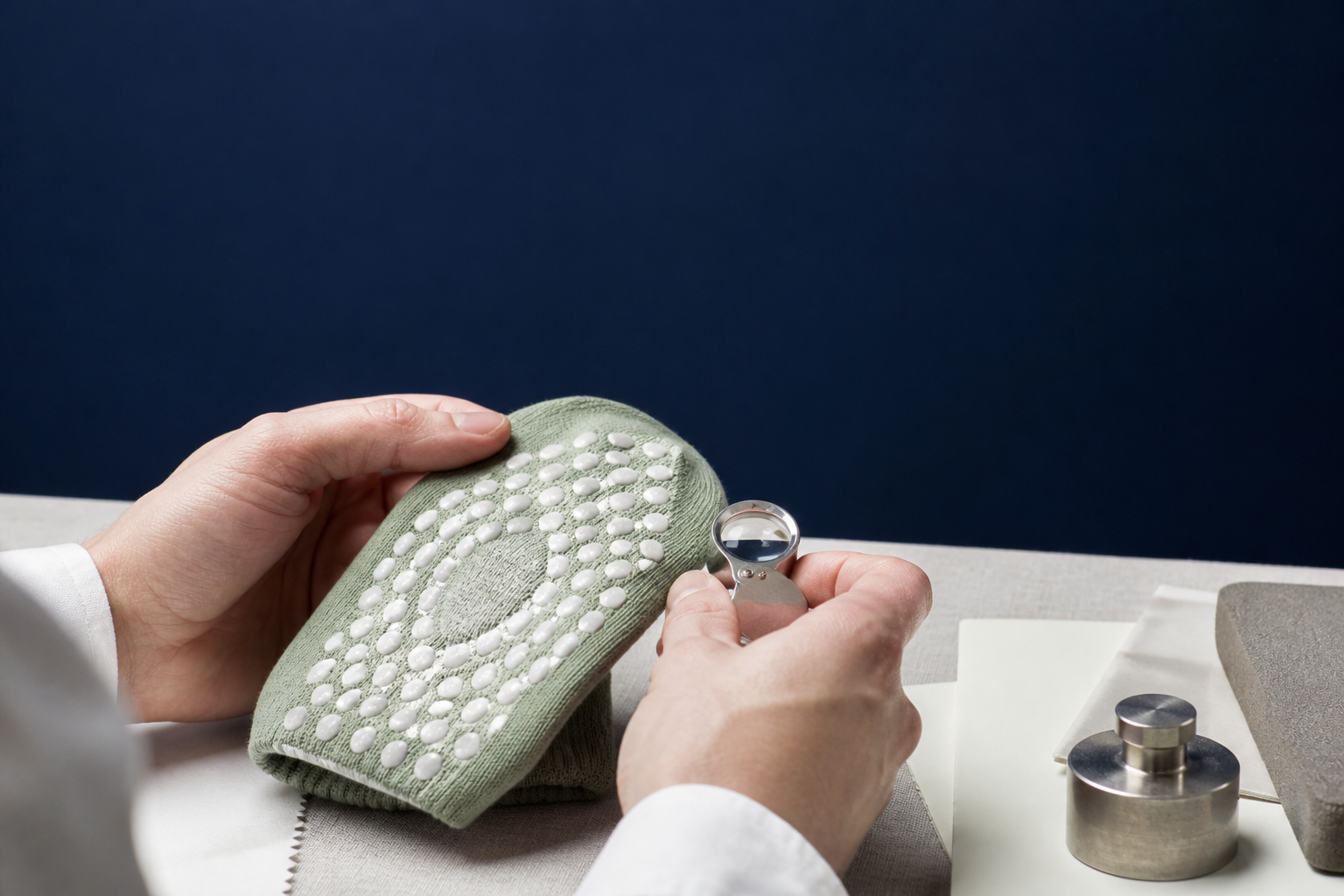
Direct answerSpecify the activity, sock construction, grip material direction, sole coverage, grip pattern, logo placement, colors, size range, packaging and approval method before requesting a final quote. Custom grip socks manufacturing combines a textile product with an applied component, so the pattern must be reviewed for coverage, flexibility, feel, appearance and attachment on the actual sock rather than chosen from a flat artwork file alone.
Start with the use case and footwear
Grip socks can be developed for studio classes, indoor training, team activities, hospitality or other defined uses. The activity and footwear determine how much grip is useful, where it can be placed and how the sock should feel when worn.
Explain the floor or surface, the footwear situation, expected movement and whether the sock is worn alone or inside a shoe. A product brief that only says ‘non-slip’ leaves too many construction decisions unresolved and can encourage unsupported performance wording.
- Activity and surface
- Worn barefoot, inside footwear or both
- Target wearer and size range
- Expected wear duration
- Cleaning and care expectations
- Retail or professional-use positioning
Define the textile sock before the grip pattern
The base sock controls fit, stretch, moisture feel, cuff recovery and the surface on which the grip is applied. Define the sock height, material direction, thickness, heel and toe construction, and any cushioning or ventilation before finalizing the sole graphic.
A grip application should follow the movement of the foot. Avoid placing a rigid or dense area where it changes the intended stretch or creates unnecessary bulk. The final relationship between textile and grip needs to be reviewed on a physical sample.
- Sock height and cuff
- Material and blend direction
- Stretch and fit expectations
- Heel and toe construction
- Cushioning or ventilation zones
- Base color and visual direction
Plan coverage and placement as a production map
Grip coverage is more than a decorative pattern. Map the sole into zones and identify where the applied material should be concentrated, reduced or omitted. Pattern spacing, edge treatment and transitions affect appearance, hand feel and how the sock flexes.
Provide a scale drawing or marked reference image with the intended sole orientation. The factory should confirm what can be reproduced at the selected size and construction, then show the interpretation on a sample.
- Heel, forefoot and toe zones
- Pattern density and spacing
- Edge distance and transition areas
- Left/right orientation
- Size grading of the pattern
- Areas that must remain flexible
Decide how branding interacts with the grip
A brand mark can be integrated into the sole pattern, placed as a separate motif or kept on the textile upper. The choice depends on artwork detail, grip geometry, stretch, visibility and the desired surface effect.
Send editable artwork, dimensions, color references and placement notes. If the logo method is not fixed, ask for a production review rather than assuming that every fine line or small letter will remain clear in an applied grip pattern.
- Logo location and orientation
- Minimum practical detail to be confirmed on sample
- Grip and logo color relationship
- Whether the mark is part of or separate from the grip pattern
- Upper-sock branding alternative
- Approved artwork version
Confirm material and process without inventing specifications
The applied grip material, color range, application stage and setting process should be confirmed for the project. These details influence appearance, flexibility, hand feel, cleaning instructions and inspection criteria.
Until the exact material and process are confirmed, describe them as a project decision rather than publishing a fixed silicone, PVC or durability claim. Ask the factory to document any material substitution and its effect on the approved sample.
- Applied-material type and finish
- Available grip colors
- Application and setting process
- Approved color and texture reference
- Care-label implications
- Change-control for substitutions
Use sampling to approve the complete product
A grip sock sample should be reviewed as a pair of systems: the textile fit and the applied sole. Check the pattern in the correct orientation, inspect edges and coverage, and evaluate the sock relaxed and stretched. The sample is also the right time to check logo clarity and packaging fit.
BEZENTO's standard sampling estimate is about 7 days, excluding sample shipping time. Revisions, special materials or complex construction may require additional time. MOQ starts from 300 pairs with flexible color and size combinations; final requirements remain subject to design, materials, construction and packaging review.
- Textile measurements and recovery
- Grip coverage and placement
- Edge consistency and attachment
- Logo clarity and orientation
- Pair matching and size grading
- Packaging and label fit
Freeze a written specification before bulk
Before production, combine the approved sock specification, sole map, artwork, material direction, color references, quantity breakdown, packaging files and quality checkpoints into one dated record. Changes after approval should be documented so an earlier pattern or artwork version does not return to production.
Bulk production is typically about 25–35 days after the relevant approvals and order requirements are confirmed. The quotation should state the starting milestone and any exclusions, including packaging or shipping, for the specific project.
For a multi-style launch, give each sole pattern and upper-sock artwork a clear identifier. List which pattern belongs to each color and size group, and keep the same identifier on the sample label, inspection sheet and packing instruction. This prevents a correct grip map from being applied to the wrong variant.
Ask the supplier to return the final specification with assumptions and pending items highlighted. A clear handoff tells the production and quality teams what must be reproduced, what can be adjusted and who must approve a change before work continues.
- Approved sample reference
- Final sole map and artwork
- Material and color record
- Size and quantity breakdown
- Inspection checkpoints
- Packaging and shipping instructions
Review grip socks in the intended use context
A sole pattern should be reviewed on the surface and with the footwear situation described in the brief. For studio use, check contact with the intended floor and movement direction. For use inside footwear, check whether the applied pattern changes the sock’s relationship with the shoe or creates unwanted bulk.
The review should separate observations from claims. Record whether the pattern looks aligned, flexes as intended, remains attached and feels appropriate for the use case. Do not convert one sample observation into a universal slip-resistance or durability promise without a defined test method.
If the product will be sold to different markets or user groups, confirm whether care instructions, labeling and packaging copy need separate review. The physical sock, applied material and written product information should describe the same approved version.
- Intended surface or footwear
- Movement and flex direction
- Bulk and fit observation
- Attachment and edge review
- Care and labeling consistency
- Qualified product wording
Review grip socks in the intended use context
A sole pattern should be reviewed on the surface and with the footwear situation described in the brief. For studio use, check contact with the intended floor and movement direction. For use inside footwear, check whether the applied pattern changes the sock’s relationship with the shoe or creates unwanted bulk.
The review should separate observations from claims. Record whether the pattern looks aligned, flexes as intended, remains attached and feels appropriate for the use case. Do not convert one sample observation into a universal slip-resistance or durability promise without a defined test method.
If the product will be sold to different markets or user groups, confirm whether care instructions, labeling and packaging copy need separate review. The physical sock, applied material and written product information should describe the same approved version.
Use the sample meeting to close specific questions rather than asking whether the product is simply good. Confirm which sole zones are accepted, which logo interpretation is final, whether the pair is matched correctly and what changes are required before production. A decision list gives the factory a clear next action and gives the buyer a record of why the sample was accepted.
- Intended surface or footwear
- Movement and flex direction
- Bulk and fit observation
- Attachment and edge review
- Care and labeling consistency
- Qualified product wording
Prepare a buyer-side approval record
Before releasing the order, create one approval record that links the textile specification, sole pattern map, artwork, material direction, size table, quantity breakdown, packaging and inspection criteria. Give every file a version and date so that a later change can be traced to the correct sample.
Mark each point as confirmed, pending or intentionally flexible. If a point remains flexible, state who can make the decision and what limits apply. This prevents an informal production choice from being mistaken for a brand-approved feature.
For repeat orders, retain the approved sample and compare the new production sample against it before bulk packing. Record any accepted difference and ask the supplier to confirm whether the difference affects fit, appearance, attachment or the agreed care direction.
- Versioned specification pack
- Confirmed and pending status
- Named approval owner
- Retained approved sample
- Documented accepted deviations
Buyer Questions
What information is needed for a custom grip sock quote?
Provide the use case, surface, footwear situation, sock construction, material direction, sole coverage, grip pattern, logo, sizes, colors, quantity, packaging, destination and target date.
Can colors and sizes be combined within the MOQ?
BEZENTO's MOQ starts from 300 pairs, with flexible color and size combinations. Final requirements are confirmed against the product design, materials, construction and packaging.
Can a logo be included in the grip pattern?
It can be reviewed as a design option. The artwork, scale, pattern spacing, stretch and application process should be checked on a physical sample before approval.
What grip material should I choose?
The suitable material and process depend on the product brief and must be confirmed with the factory for the intended construction, appearance, feel and care instructions.
How long does grip sock sampling take?
BEZENTO's standard sampling estimate is about 7 days, excluding sample shipping time. Revisions, special materials and complex construction may require additional time.
Discuss Your Custom Sock Requirements
Send your product type, artwork, quantity, size range, packaging, destination and target date for a practical project review.