
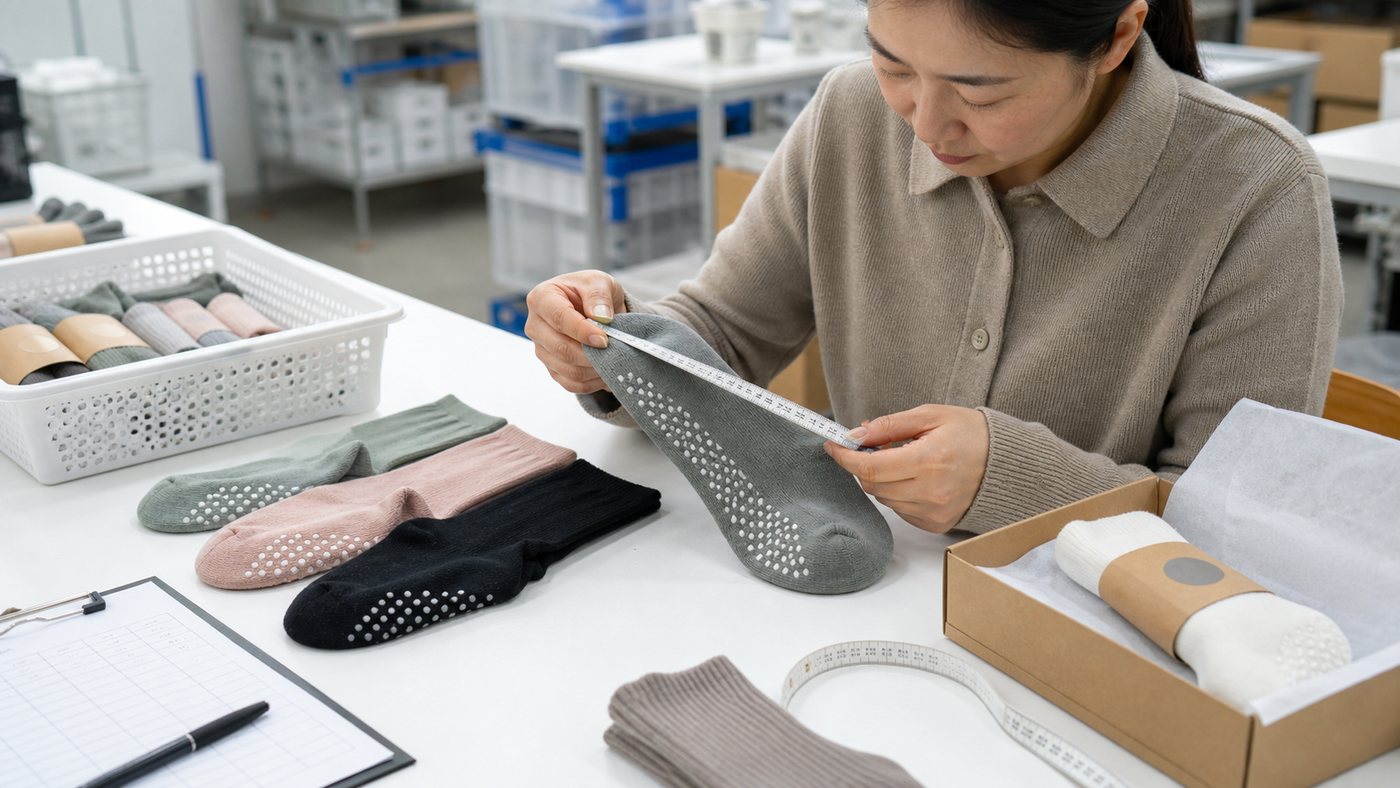
Direct answerA useful sock QC checklist compares bulk goods with the approved specification and sample. It should cover measurements, construction, appearance, function, labeling, assortment, packaging and cartons using defined acceptance criteria.
Quality expectations should be written before production, not decided after finished goods are packed. Clear references help buyers and inspectors evaluate the same requirements.
Prepare inspection references
The inspection team needs the latest approved documents and samples. Outdated artwork or size charts can create false failures or missed defects.
- Approved physical sample
- Final size specification
- Color and artwork references
- Packing and assortment instructions
Check product measurements and workmanship
Measure agreed points using a consistent method and inspect knitting, linking, trimming, elasticity and finishing. Define tolerances for dimensions that can vary naturally.
- Length and width measurements
- Heel and toe placement
- Cuff recovery and stretch
- Loose yarn, holes or visible defects
Review appearance and functional details
Compare color, logo, pattern alignment and surface finish. Grip, compression or other functional features may require project-specific checks or testing.
- Logo size and placement
- Color consistency
- Pair matching
- Functional application coverage
Verify packaging and cartons
Correct socks can still create retail problems if labels, barcodes or assortments are wrong. Treat packaging data as part of the product specification.
- Size and fiber labels
- SKU and barcode accuracy
- Pairs per pack and carton
- Carton marks and condition
Buyer Questions
Should every pair be inspected?
Inspection scope depends on order risk and agreement; some checks may be 100% while others use sampling.
What is an approved sample used for?
It provides a shared physical reference for appearance, construction and workmanship alongside written specifications.
How should measurement tolerance be set?
Set realistic tolerances by construction and measurement method before bulk inspection.
Does final inspection replace process control?
No. Incoming, in-process and packing checks can prevent defects from reaching the final stage.
What should an inspection report include?
Include order details, sample size, results, defect evidence, measurements, packing checks and disposition.
Practical Recommendation
Use a written project brief, compare options against the intended product and confirm important decisions through samples or documented approvals. Final requirements depend on the design, quantity and destination market.
Discuss Your Custom Sock Requirements
Send your product type, artwork, quantity, size range, packaging, destination and target date for a practical project review.