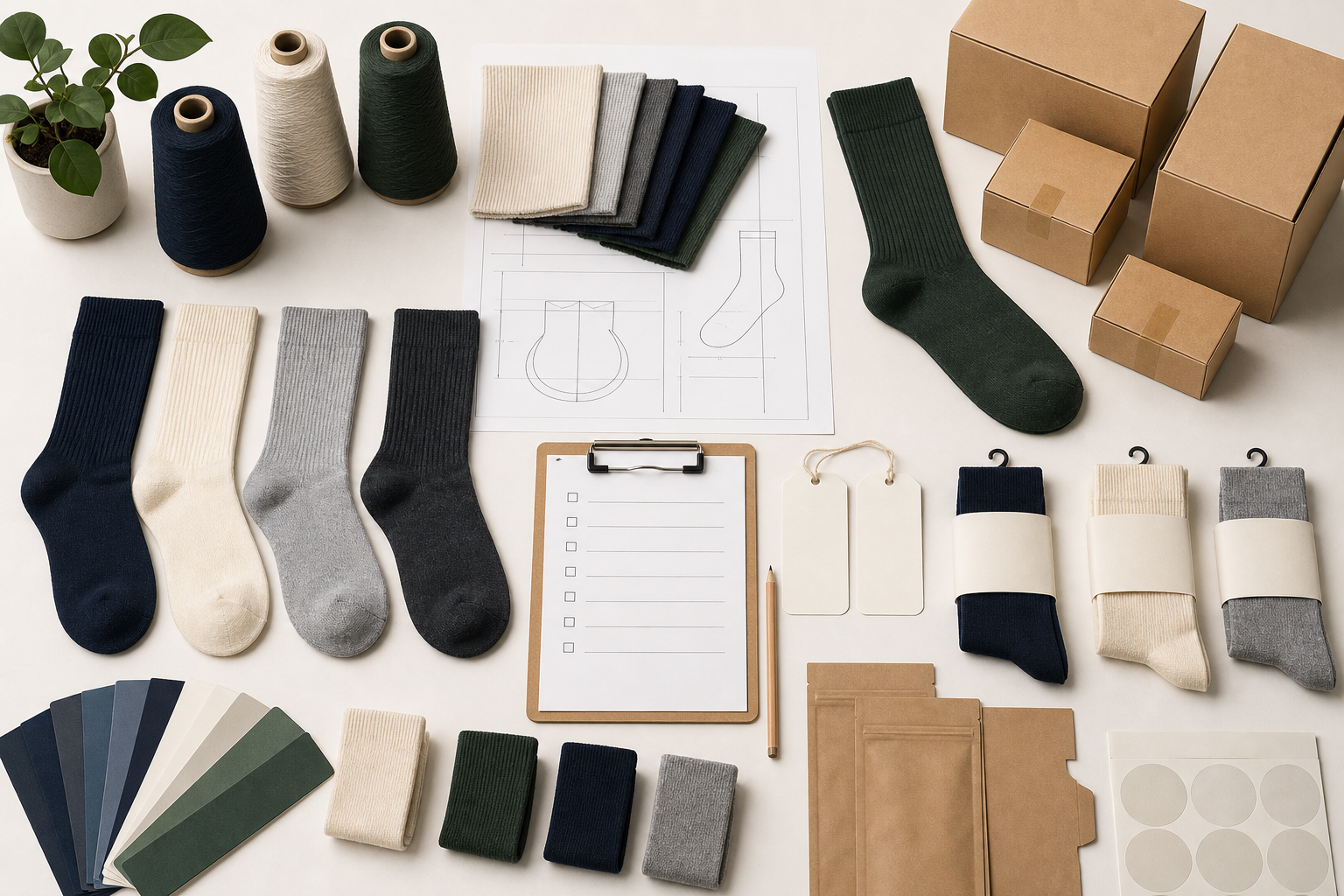
Direct answerBefore private-label sock production, approve one controlled specification covering the product, artwork, materials, sizes, colors, logo method, packaging, label content, quality checkpoints, quantity breakdown and shipping marks. Confirm destination-market requirements with a qualified compliance adviser, then keep the approved sample and dated specification as the shared reference for bulk production.
Build one product specification before requesting the final quote
A reference photo is not a production specification. It can show a direction, but it rarely defines dimensions, yarn, construction, logo execution, size grading or packaging. When suppliers quote from different assumptions, the resulting prices are not directly comparable.
Create one version-controlled brief for every design. Give each revision a date or version number, and identify which points are confirmed, provisional or awaiting a sample. If a change affects material, construction, packaging or quantity, ask the supplier to confirm its effect on price and timing before accepting it.
- Sock type, intended wearer and use
- Size range and quantity by size and color
- Material target and any performance requirement
- Cuff, leg, heel, toe, cushioning and ventilation construction
- Logo method, dimensions, colors and placement
- Packaging format, label content and destination market
Confirm commercial assumptions in writing
BEZENTO's MOQ starts from 300 pairs, with flexible color and size combinations. Final requirements are confirmed against the design, materials, construction and packaging. This distinction matters because the headline quantity does not by itself define how many artworks, yarn colors, packaging versions or special processes can share an order.
A useful quotation separates confirmed requirements from assumptions. It should identify what is included in the unit price and which items may be charged separately, such as sampling, custom packaging, testing or freight. Do not compare quotations until the underlying brief is consistent.
- MOQ and allowed color/size breakdown
- Sample charge and revision assumptions
- Product price and packaging scope
- Testing or documentation assumptions
- Payment milestones and quote validity
- Freight term, destination and taxes or duties responsibility
Use sampling to validate production decisions
A sample should test the actual decisions that matter in bulk: fit, measurements, stretch, hand feel, logo clarity, color direction and packaging compatibility. A visually attractive sample can still be incomplete if the final yarn, label, barcode or pack quantity has not been confirmed.
BEZENTO's standard sampling estimate is about 7 days, excluding sample shipping time. Artwork revisions, special materials or complex construction may add time. Record every requested change and avoid approving a sample through scattered messages that leave the final version unclear.
- Check the sample relaxed and worn where practical
- Measure against the agreed specification
- Review logo appearance and inside construction
- Confirm which materials and colors are final
- List unresolved packaging or labeling items
- Keep an approved physical sample as a bulk reference
Treat label content as a market-specific workstream
Label requirements depend on where the socks will be sold. For products marketed in the United States, FTC guidance explains that most textile products need fiber content, country of origin and the identity of the manufacturer or another responsible business; care instructions are governed separately. The FTC also explains that hosiery falls within textile wearing apparel for its Care Labeling Rule.
For textiles marketed to consumers in the European Union, official EU guidance states that textile products must show fiber composition and that required text may need the official languages of the countries where the product is offered. These examples show why copying a label from another market is risky.
The brand or importer should identify the destination market and obtain appropriate compliance advice. The factory can prepare the physical label from approved content, but the buyer should not assume that a design template automatically satisfies every country.
- Fiber names and percentages based on the final product
- Country-of-origin wording
- Responsible company name or permitted identifier
- Care instructions supported by the product
- Required languages and legibility
- Any market-, retailer- or product-specific warnings
Approve packaging as a functional specification
Private-label packaging has to hold, identify, protect and present the correct product. A belly band, hang tag, bag or box should be assessed against the folded sock dimensions, material thickness, hanging method, barcode position and the retailer or fulfillment workflow.
BEZENTO can prepare packaging design or work from customer-supplied design. Exact packaging types, artwork responsibility, costs and supplier minimums should be confirmed for the project. Approve dielines and content before production, then check a physical proof or representative sample where practical.
- Packaging style and finished dimensions
- Dieline version and artwork orientation
- Brand, product, size and color identification
- Barcode data supplied by the responsible party
- Pack quantity and assortment
- Carton marks and fulfillment labels
Define quality checkpoints before bulk starts
The phrase ‘quality inspection’ is too broad unless both parties know what will be checked. Translate critical requirements into observable or measurable criteria. Separate product checks from packaging checks so a correct sock is not shipped with the wrong size label or assortment.
A practical plan may cover incoming materials, knitting consistency, dimensions, toe closing, finishing, logo execution, pairing, labeling, packaging and carton quantity. The exact inspection method and acceptance rules should reflect the order and any buyer-specific standard.
- Critical measurements and tolerances
- Color and approved sample reference
- Logo position, clarity and construction
- Visible defects and finishing
- Correct pairing, size and color assortment
- Label, barcode, package and carton accuracy
Freeze the order with a pre-production approval pack
Before bulk production, place the approved files in one controlled package: specification, artwork, sample status, packaging artwork, label copy, quantity breakdown and shipment instructions. The purpose is not paperwork for its own sake; it is to prevent an old file or informal message from replacing the approved version.
BEZENTO's bulk production estimate is typically about 25–35 days after the relevant approvals and order requirements are confirmed. Because the exact starting milestone and inclusions can vary, the order confirmation should state them explicitly. Changes after this point should be documented with their effect on cost, timing and inventory already produced.
- Final dated product specification
- Approved sample or recorded approval status
- Final logo and packaging artwork
- Approved label content
- Purchase order and assortment breakdown
- QC, packing, carton and shipping instructions
Plan the handoff between brand, factory and packaging supplier
A private-label order often involves more than one decision-maker. The brand may approve the product, a designer may release artwork, the factory may confirm construction and a packaging supplier may prepare the physical pack. Assign one owner for each approval so that a finished file is not mistaken for an approved file.
Use a short handoff record whenever a file moves from one party to another. Note the file name, version, date, approver and any open question. This is especially useful when several colors, sizes or retail packs share one launch and prevents a correct master file from being applied to the wrong variant.
- Brand approval owner
- Artwork and copy owner
- Factory technical reviewer
- Packaging production contact
- Version and change log
Turn the checklist into a buyer-ready brief
A checklist is useful only when it produces a document that another person can review without a meeting. Put the approved information into a simple table with one row per style and columns for color, size range, quantity, yarn direction, construction notes, logo method, packaging unit and open questions. Mark each cell as confirmed, proposed or pending.
Before requesting the final quotation, ask the supplier to return the same table with its assumptions and exclusions. Compare the returned version against the brand’s brief line by line. This catches common gaps such as a quantity that excludes one color, a packaging unit that does not match the retail plan, or a logo instruction that cannot be read from the artwork alone.
The final brief should also name the approval owner and the date by which decisions are needed. If a requirement is intentionally flexible, write the acceptable range instead of leaving it blank. That gives the factory room to recommend a workable option while keeping the buyer’s commercial and product limits visible.
- One row per style and variant
- Confirmed, proposed and pending status
- Supplier assumptions and exclusions
- Open-question owner and due date
- Approved version stored with the purchase order
Buyer Questions
What information is needed for a private-label sock quote?
Provide the sock type, intended use, artwork, materials, sizes, colors, quantity breakdown, logo method, packaging, destination and target timing. Ask the supplier to identify every remaining assumption.
Can colors and sizes be combined within BEZENTO's MOQ?
BEZENTO's MOQ starts from 300 pairs, with flexible color and size combinations. Final requirements are confirmed against the design, construction, materials and packaging.
Should packaging be finished before sock sampling?
The packaging direction and required content should be identified early, but final dimensions should be checked against the approved sock and folding method before packaging production.
Who is responsible for label compliance?
Responsibilities depend on the sales market and commercial arrangement. The brand or importer should identify applicable requirements and obtain qualified advice; the factory should manufacture from approved, documented content.
What should be frozen before bulk production?
Freeze the product specification, sample status, artwork, materials, dimensions, quantity breakdown, packaging, label content, QC requirements and shipping instructions.
Sources and further reading
- FTC: Clothing and Textiles Business Guidance
- FTC: Care Labeling Rule Guidance
- FTC: Textile and Wool Labeling Requirements
- European Union: Textile Label Requirements
- BEZENTO owner-confirmed factory facts dated 2026-08-16
Discuss Your Custom Sock Requirements
Send your product type, artwork, quantity, size range, packaging, destination and target date for a practical project review.