
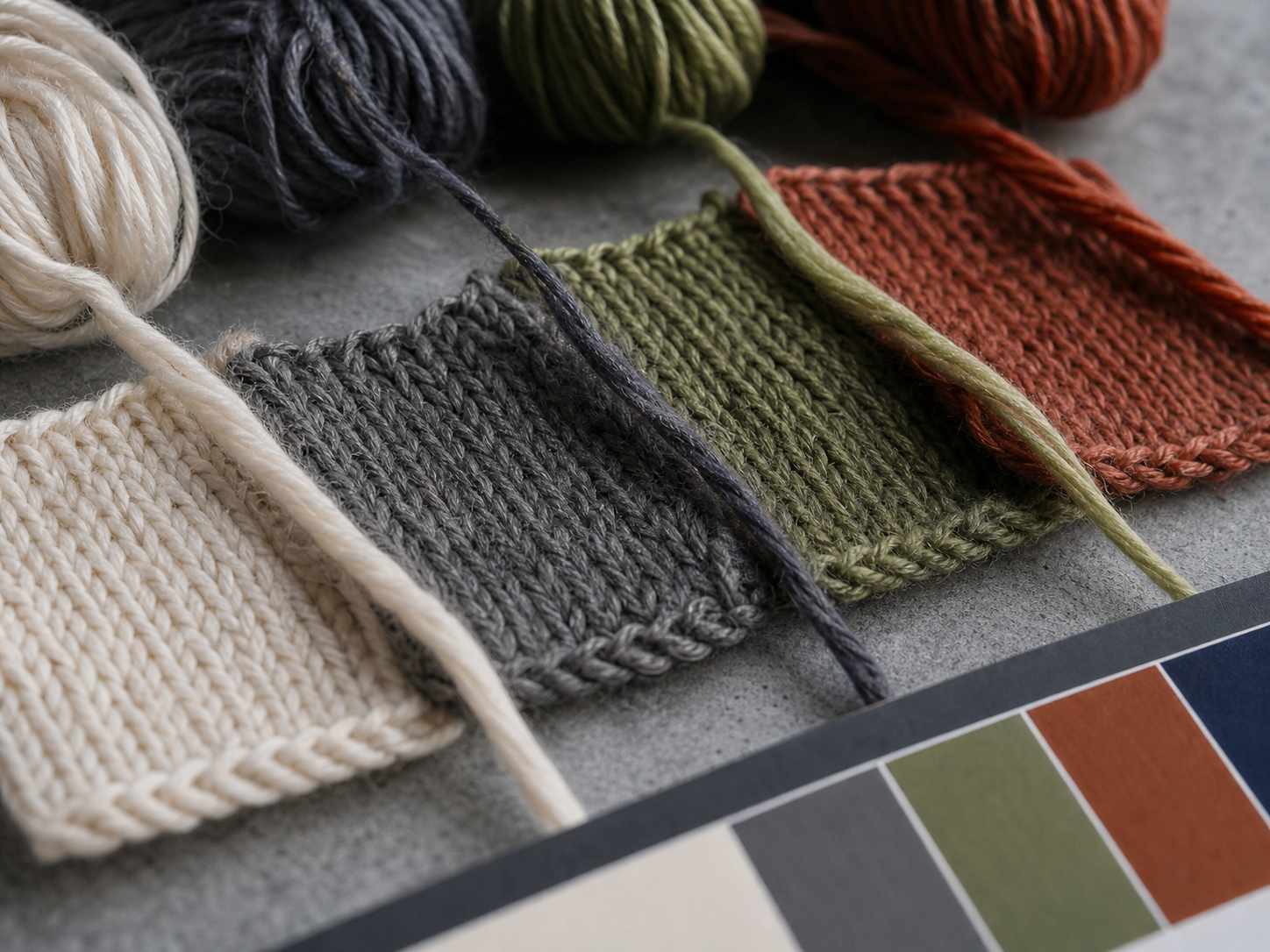
Direct answerChoose sock materials from the product’s intended use, wearer expectations, construction and target price. Fiber percentage alone does not determine performance; yarn quality, knit structure, cushioning and finishing also influence the result.
Material selection is one of the earliest decisions in a custom sock project. A clear product brief helps the manufacturer recommend a workable blend instead of relying on a generic fiber label.
Start with the intended use
Daily casual socks, sports socks, work socks, winter socks and dress socks need different balances of softness, durability, temperature control and stretch. Define the wearer, climate, footwear and expected activity before choosing a blend.
- Casual: comfort and everyday durability
- Athletic: moisture management, fit and abrasion resistance
- Outdoor: warmth, cushioning and odor management
- Dress: fine gauge, smooth appearance and controlled bulk
Compare common fiber families
Cotton offers familiar comfort, bamboo-derived viscose can provide a soft hand feel, wool supports temperature regulation, and synthetic fibers can improve strength, drying and shape retention. Most commercial socks use blends because a single fiber rarely supplies every required property.
- Ask for the actual blend percentage
- Confirm yarn availability and color options
- Review care-label implications
- Approve hand feel on a physical sample
Match the yarn to the construction
The same blend can feel different when yarn count, knitting density, terry cushioning or mesh zones change. Review materials together with sock structure, not as an isolated specification.
- Cuff recovery and elastane placement
- Heel and toe reinforcement
- Full, half or targeted terry
- Ventilation or mesh zones
Approve material through sampling
Use the sample to check appearance, hand feel, fit, recovery and performance against the written brief. If a claim requires testing, define the method and acceptance standard before bulk production.
- Keep an approved physical reference
- Record any material substitutions
- Confirm bulk color tolerance
- Align testing with destination requirements
Buyer Questions
Is 100% cotton suitable for socks?
Usually a blend is more practical because stretch and reinforcement fibers help fit, recovery and durability.
Is bamboo always cooler than cotton?
Comfort depends on the full blend, yarn, knit and conditions of use; compare samples rather than relying on one fiber name.
Which material is best for sports socks?
The answer depends on activity, climate, cushioning and footwear. Moisture management and fit are usually important.
Can I match a brand color in yarn?
Factories can compare available yarn cards or discuss custom dyeing, subject to quantity, timing and tolerance.
Should material testing be arranged?
Testing may be appropriate for performance claims, compliance needs or buyer specifications and should be agreed before bulk.
Practical Recommendation
Use a written project brief, compare options against the intended product and confirm important decisions through samples or documented approvals. Final requirements depend on the design, quantity and destination market.
Discuss Your Custom Sock Requirements
Send your product type, artwork, quantity, size range, packaging, destination and target date for a practical project review.