Direct answerChoose a custom sock manufacturer by verifying relevant product capability, sampling discipline, written specifications, quality checkpoints, packaging support and realistic export planning. Compare evidence and process clarity—not quotation price alone.
A reliable supplier should be able to translate your artwork, target use, size range, quantity and packaging requirements into a production-ready specification. This guide gives brand owners, wholesalers and sourcing teams a practical framework for that evaluation.
1. Define the product before comparing factories
Supplier comparisons become misleading when each factory receives a different brief. Begin with the same core information for every candidate: sock type, intended wearer, size range, material preference, logo method, quantity by design and size, packaging, destination and target date.
Minimum quotation brief
- Reference image or artwork
- Sock construction and intended use
- Material or performance requirement
- Sizes, colors and quantity breakdown
- Logo placement and preferred method
- Retail packaging and carton requirements
- Destination country and schedule
2. Verify relevant manufacturing capability
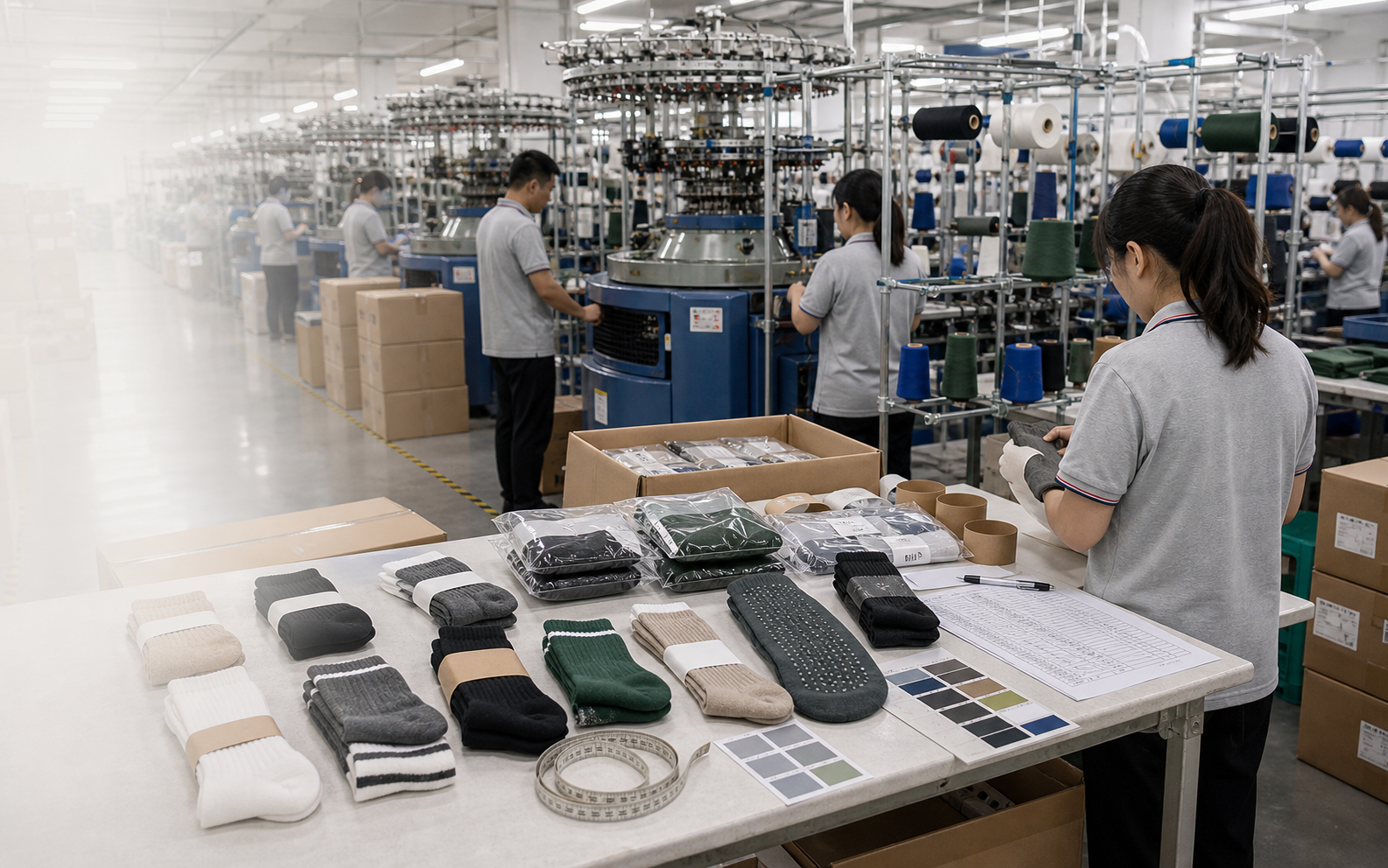
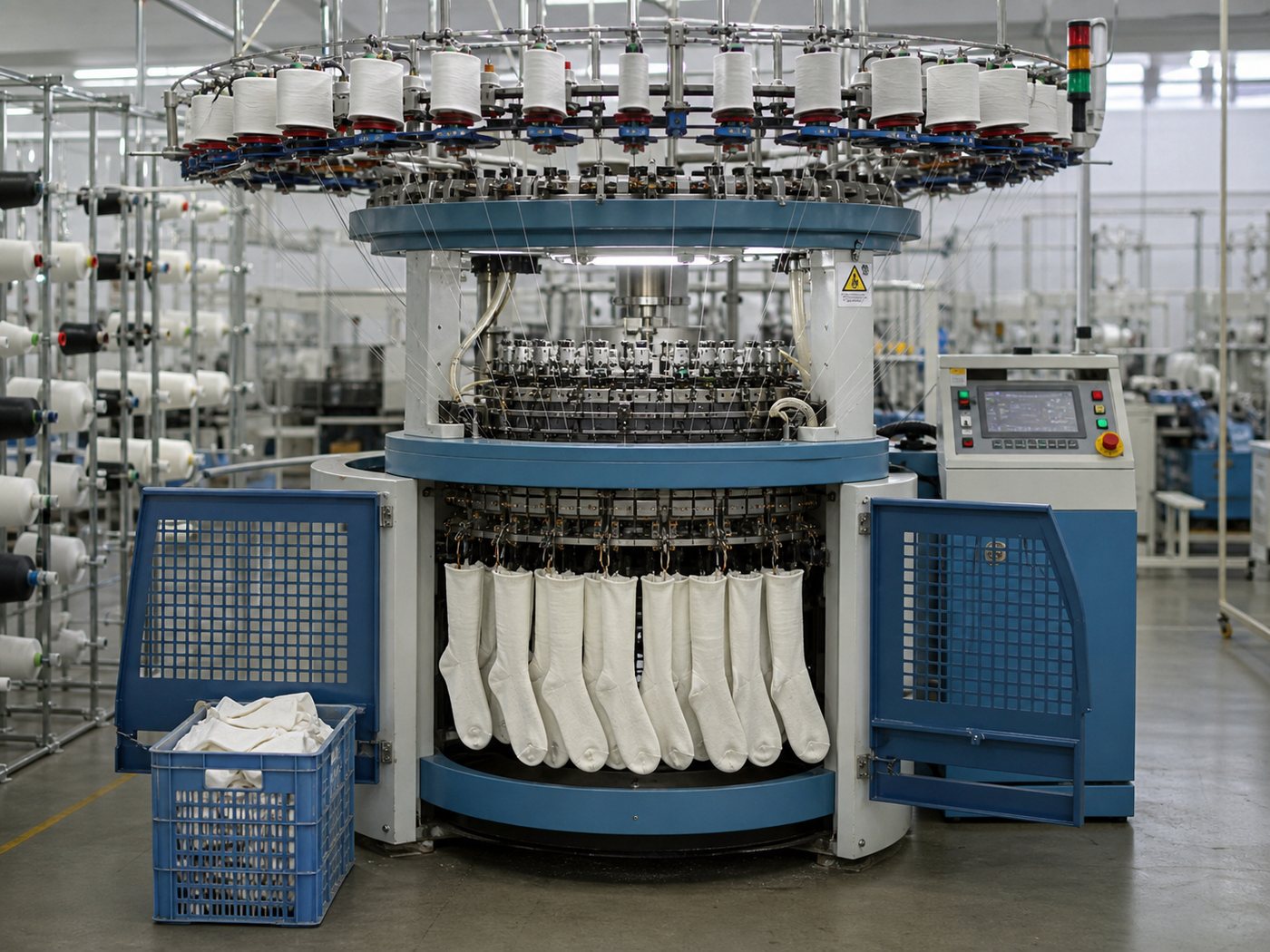
A factory that makes basic casual socks may not be the right fit for compression, technical sports or silicone grip products. Ask for evidence related to the construction you need, then discuss the machines, yarns, finishing processes and inspection points involved.
For custom branding, confirm whether the design is better suited to jacquard knitting, embroidery, printing or a grip application. The right method depends on artwork detail, stretch, placement, durability and target cost.
3. Evaluate the sampling and approval process
A sample is useful only when both sides know what it represents. The supplier should record yarn, color references, measurements, logo details, construction and packaging status. Your approval should identify any remaining changes before bulk production.
Ask what is included in the sample charge, how revisions are handled and which variables may still change in bulk. Keep an approved physical sample and a written specification as shared references.
4. Review quality control as a sequence
Quality control should not be limited to a final visual check. A stronger plan considers incoming yarn or components, knitting consistency, measurements, finishing, logo execution, functional requirements, assortment and packing.
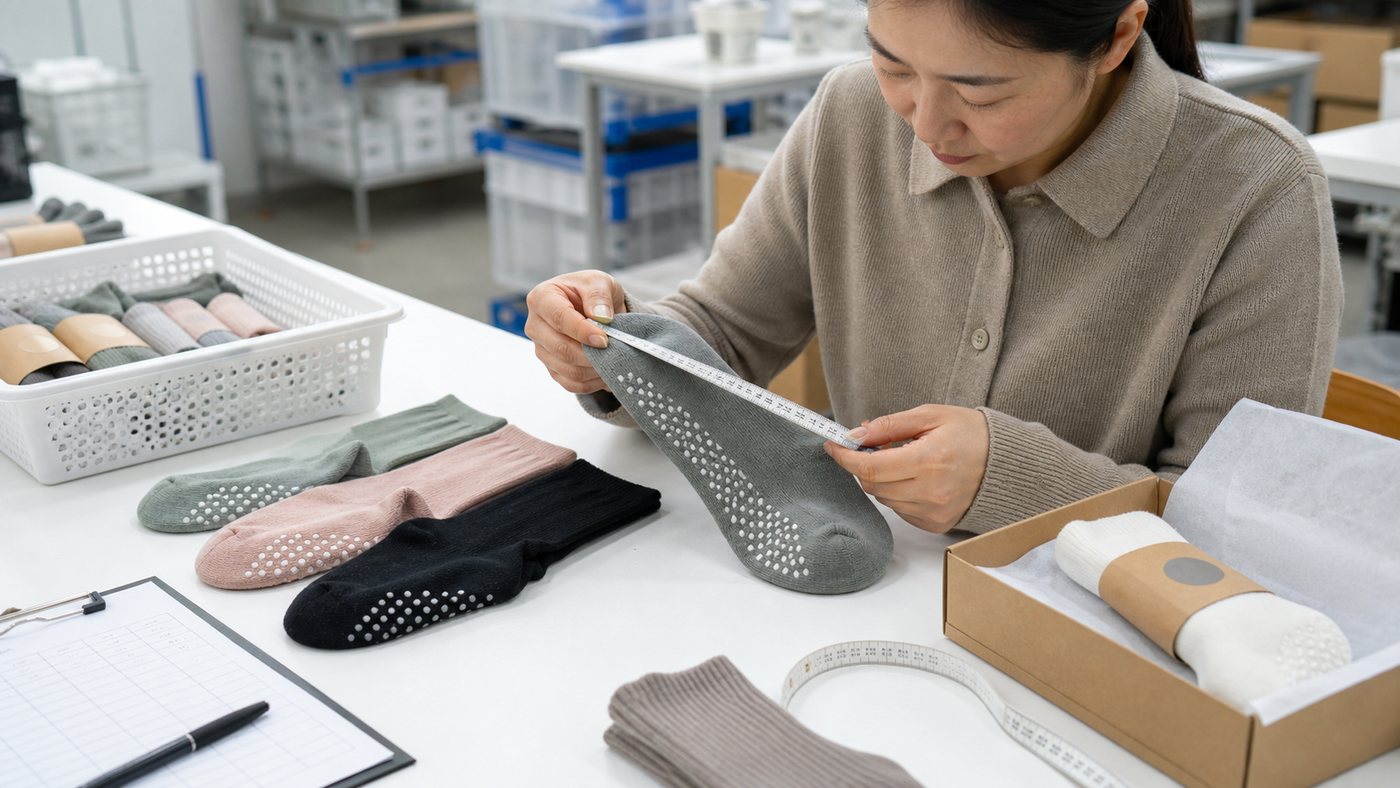
Request inspection records appropriate to the order, such as measurement results, QC photos, packing confirmation and carton information. Testing needs vary by material, product claim and destination market, so confirm them project by project.
5. Compare MOQ, price and lead time together
The lowest unit price may rely on a larger MOQ, simpler packaging, available yarn colors or a longer schedule. Compare quotations using the same specification and ask each supplier to separate sample, product, packaging, testing and freight assumptions where relevant.
MOQ can change with yarn availability, design colors, size range, construction and packaging. Treat quoted timing as an estimate until artwork, materials, sample approval and production capacity are aligned.
6. Test communication before placing the order
Good communication is specific. Look for written confirmation of changes, clear ownership of open questions and early warnings when a request affects cost, quality or schedule. A small sampling project can reveal how the supplier handles revisions and documentation.
Buyer questions to ask
What information is needed for an accurate quotation?
Provide the sock type, artwork, material, size range, quantity breakdown, logo method, packaging, destination and target date. Missing details should be identified as assumptions.
How should I compare custom sock samples?
Check measurements, fit, yarn and hand feel, color, logo, construction, elasticity, functional features and packaging against the written brief.
What usually changes the MOQ?
Yarn availability, number of colors, size range, construction, logo method and custom packaging can all influence the minimum quantity.
Should packaging be approved before bulk production?
Yes. Confirm artwork, dimensions, barcode, assortment and carton requirements early so packaging does not delay shipment.
How can I reduce sourcing risk?
Use one written specification, approve a physical sample, define inspection points, confirm change control and keep payment and shipping milestones documented.
Practical recommendation
Shortlist suppliers using relevant capability first. Then compare sample quality, documentation, communication and commercial terms using the same brief. Move to bulk production only when product and packaging requirements are written and the approval status is clear.
Prepare Your Custom Sock Project
Send your sock reference, artwork, quantity, size range, packaging and destination. BEZENTO will review the requirements and outline the next practical step.