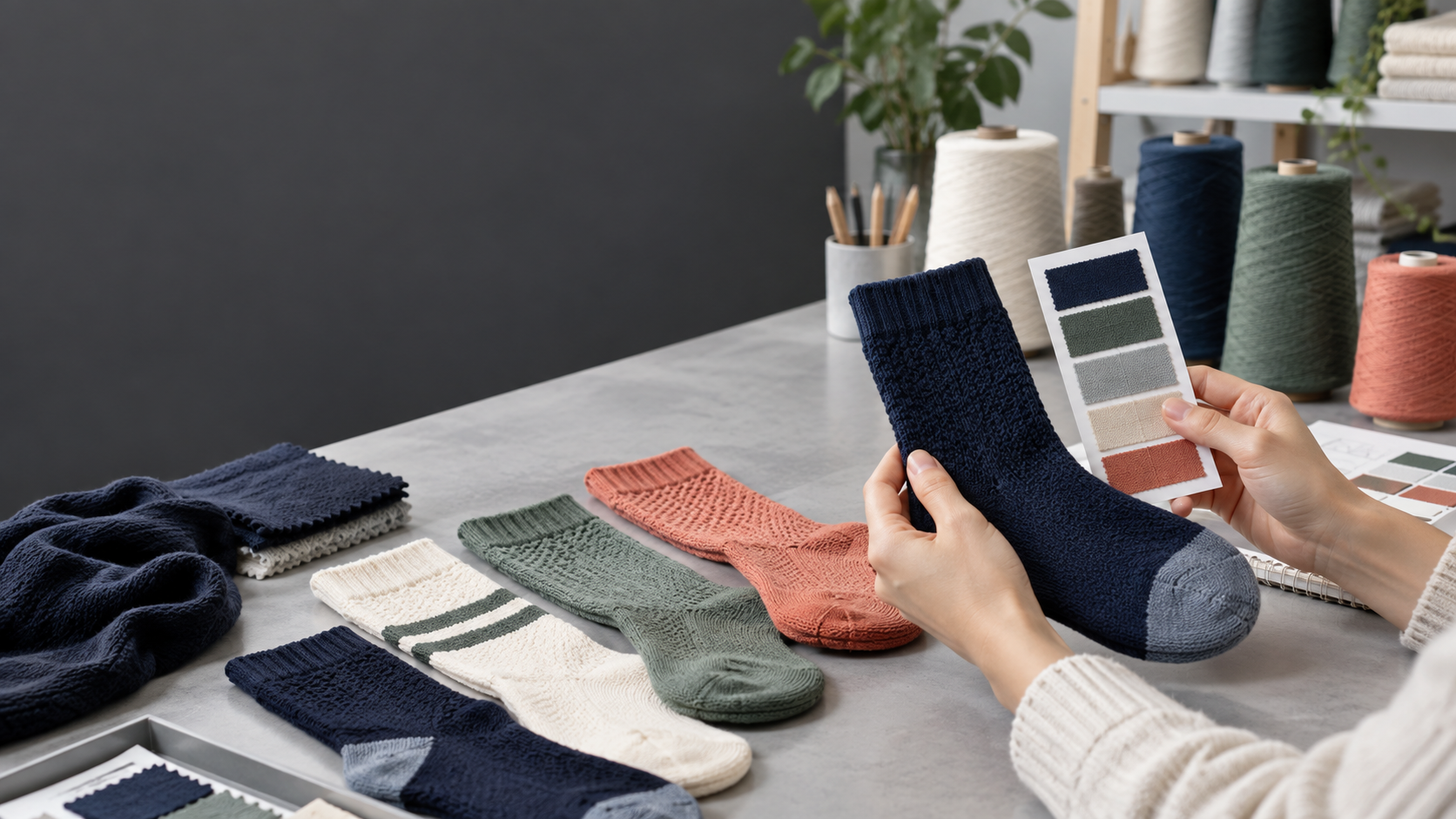
Direct answerA reliable custom sock color approval process compares the color against a named physical or standardized reference, on the actual yarn and construction, under an agreed viewing condition. Record the color version, tolerance, sample status and decision owner before bulk knitting. A screen image or verbal description is not enough because yarn, stitch density, finishing and lighting can change the result.
Start with a color reference that can be checked
The first color decision should identify the reference, not just the name. Words such as navy, sage or warm white can describe a direction, but they do not give a factory a repeatable target. Send a physical swatch, a recognized color reference or a clearly identified artwork file, and state which source controls if the references disagree.
A digital color picked from a monitor is useful for a first conversation, but screens vary by device, brightness and color profile. Treat it as a design direction until the factory has made the color on the proposed yarn. The approved decision should refer to the knitted sock or yarn sample, because the same colorant can look different on a smooth yarn and a textured terry area.
Put the reference in the custom sock tech pack with a version number and date. If the customer supplies a physical swatch, photograph it for the file but do not use the photograph as the only approval evidence. Record who owns the reference and whether a replacement swatch is allowed if the original is damaged.
- Reference source and code
- Material and yarn direction
- Version and date
- Controlling reference
- Approval owner
Explain where the color will appear on the sock
Color appearance depends on construction. A plain knit, mesh, terry, ribbed cuff and jacquard motif expose different amounts of yarn and create different visual texture. A buyer should show the color on the actual zones that matter, especially when one color crosses from a smooth leg into a dense sole or a raised logo.
Map each color to a location on the flat drawing: cuff, body, heel, toe, sole, ventilation panel, logo and packaging. If the left and right socks are different, label both. This prevents a color approval made on a small yarn card from being mistaken for approval of every construction area.
When a brand has a multi-color design, define the relationship between colors as well as each individual target. Note which color is the visual anchor, which areas may use a practical substitute and whether contrast must be checked when the sock is stretched.
- Color-to-zone map
- Construction effect
- Left/right differences
- Stretch condition
- Contrast requirement
Review a lab dip or yarn sample before the full sock
A lab dip or yarn sample can make an early color decision faster, but it is an intermediate check rather than a complete product approval. Confirm whether the sample uses the intended fiber blend, yarn construction and finishing direction. Otherwise a close-looking dip may not predict the custom sock sample checklist.
Ask the factory to identify the sample number, material, dye lot or production reference where available, and the proposed next step. If the color needs adjustment, describe whether it is too light, too dark, too warm, too cool or too saturated. Location-based language is more useful than saying the color is wrong.
Keep the accepted dip with the later knitted sample. The dip establishes the direction; the knitted sock confirms how the color behaves with stitch density, adjacent colors, stretch and finishing. Record both decisions so a later team member does not approve the wrong reference.
- Sample ID
- Material match
- Color observation
- Requested adjustment
- Next approval step
Set a viewing condition before comparing shades
Lighting can change a color decision. Compare the reference and sample together under an agreed neutral viewing condition, and avoid judging a shade from a single photograph. If the product will be sold in stores or used outdoors, note that the final viewing environment may differ from the development review.
Ensure the samples are clean, dry and placed on a neutral background. Compare the same area of the sock and check both relaxed and lightly stretched states when the design includes a rib, mesh or logo. The aim is not to eliminate every visual difference, but to make the decision repeatable for the buyer and factory.
If different teams review the sample remotely, send the reference code, sample ID and written observation with the images. Ask reviewers to use the same decision terms and to identify the exact zone they assessed. A shared process reduces conflicting feedback from design, sourcing and quality control.
- Agreed light condition
- Neutral background
- Relaxed and stretched view
- Reference beside sample
- Consistent review terms
Define an acceptable shade tolerance
A production brief should state what variation can be accepted and who decides when a shade is outside the agreed range. Do not copy a tolerance from another product without checking the yarn, construction and brand requirement. Some programs prioritize a close brand color; others prioritize consistency across a large assortment.
Use a physical approved standard where possible and keep it protected from light, moisture and handling. If the project uses an instrument or a standardized color system, record the method and the responsible reviewer. The number alone is not a substitute for checking the custom sock sample checklist in the intended construction.
Separate color variation from other issues such as pilling, streaks, contamination or uneven knitting. A shade may be within the agreed direction while a visible production defect still requires correction. The inspection sheet should give each issue its own line.
- Approved standard
- Tolerance owner
- Review method
- Storage of reference
- Separate defect checks
Check color interactions with logos and packaging
Color approval is also a legibility decision. Check the logo against the background when the sock is relaxed and worn or lightly stretched. A contrast that looks clear on a flat artwork file can weaken on a mesh or textured area. If the logo method changes, request a new review rather than assuming the original contrast still applies.
Review the complete assortment together. Adjacent colors may make one shade look warmer or darker, and a packaging card or label can change the visual context. Photograph the approved set in one controlled setup and identify each sample so the image remains useful as a record.
If packaging uses a printed brand color, keep its approval separate from the yarn approval. A printed carton, woven label and knitted sock have different surfaces. They can be coordinated, but they should not be treated as interchangeable color standards.
- Logo contrast
- Stretch effect
- Assortment context
- Packaging surface
- Separate approval records
Confirm bulk shade control before knitting
Before bulk production, ask the factory how the approved color will be carried into production. Confirm the approved sample or standard, the relevant material version, the lot or batch record used by the factory and the point at which shade variation will be checked. This turns a visual preference into a practical control point.
For a multi-color order, list the quantity basis and color breakdown beside the approval record. If color changes are made after sampling, update the artwork, quote assumptions and sample version together. A late color change can affect yarn availability, knitting sequence and packaging identification.
Ask for a clear escalation route when a batch does not match the approved standard. The response might be a hold, a review sample, a documented deviation or rework, depending on the agreed requirement. Record the decision rather than relying on an informal message.
- Approved color standard
- Material or lot record
- Color breakdown
- Change control
- Escalation decision
Use a simple color-approval sign-off
A useful sign-off identifies the product, sample version, color zones, reference source, review condition, accepted tolerance and approver. It should also show open points. A signature or email reply is not enough if nobody can tell which file and which sample were approved.
Attach the approval to the custom sock tech pack and quotation or order confirmation. When production starts, the factory and buyer should be able to point to the same reference. If a repeat order changes yarn, construction, color or packaging, reopen the relevant color check instead of copying the old approval without review.
The goal is a traceable decision, not a promise that every sock will look identical under every light. A documented standard helps the teams distinguish an accepted production variation from a real mismatch and gives the buyer a clear basis for the next action.
- Product and sample version
- Color-zone list
- Reference and condition
- Tolerance and open points
- Named approval record
Buyer Questions
Can a screenshot be used as the final custom sock color standard?
Use a screenshot as an early design reference only. Final approval should use the proposed yarn or knitted sock against a named physical or standardized reference.
Should color be approved on a yarn card or a finished sock?
Use the yarn card or lab dip for an early direction, then confirm the finished sock because stitch density, texture, stretch and finishing affect appearance.
How should a buyer describe a color problem?
Identify the zone and describe the observed direction, such as too light, too warm or too dull, then state the requested adjustment and sample version.
Does packaging use the same color approval as the sock?
No. Coordinate the colors, but approve knitted yarn, printed packaging and labels according to their own surface and production method.
When should color be checked again?
Recheck when yarn, construction, dye or finishing changes, and when a repeat order uses a different material or production reference.
Discuss Your Custom Sock Requirements
Send your product type, artwork, quantity, size range, packaging, destination and target date for a practical project review.